Blog

APCO ‘taking action for bone health’ on World Osteoporosis Day 2021

WOD TILE (1)

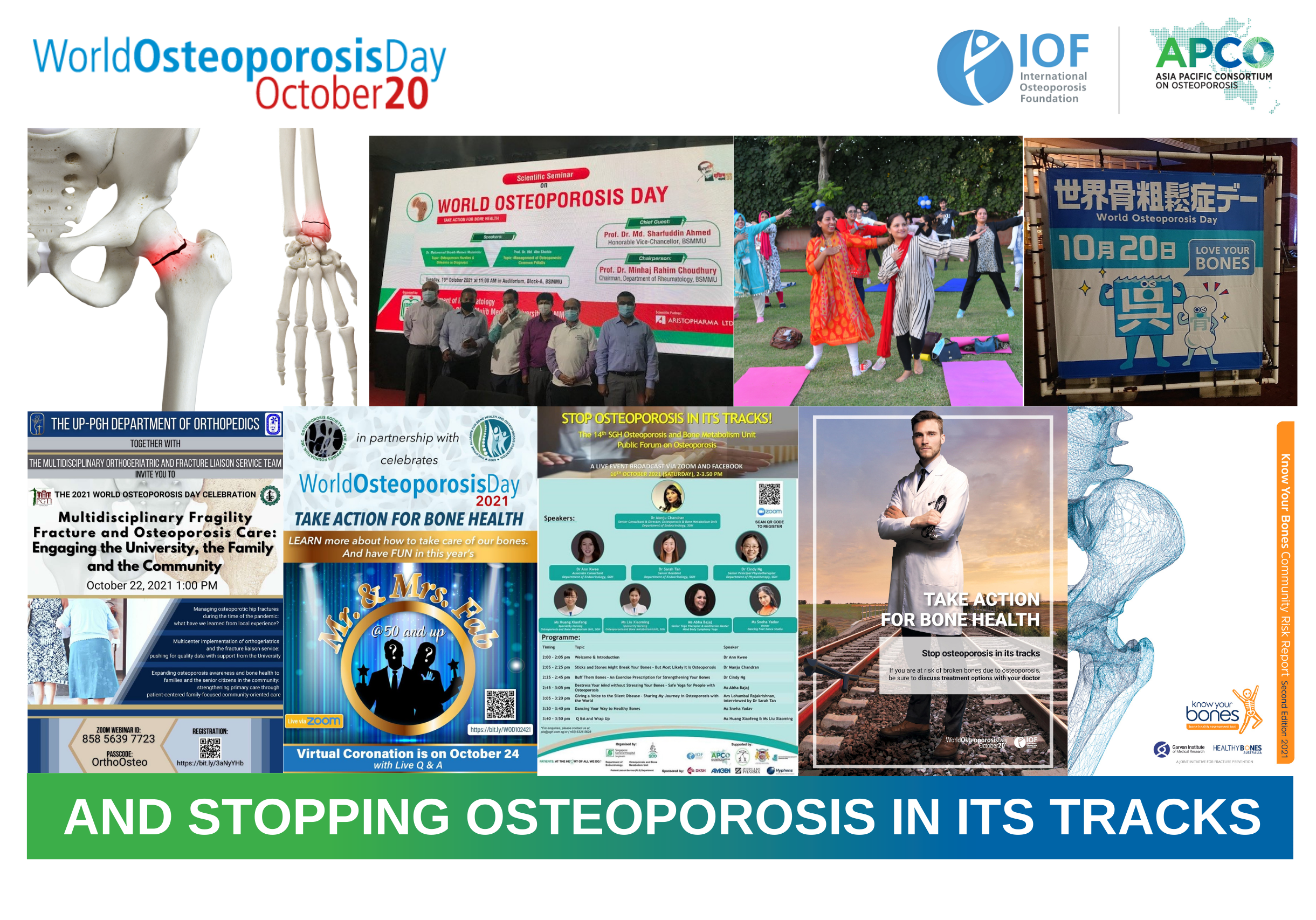
Last Wednesday, October 20, 2021, members of the Asia Pacific Consortium on Osteoporosis (APCO) celebrated World Osteoporosis Day. This annual global campaign coordinated by the International Osteoporosis Foundation (IOF) with a history going back a quarter of a century, strives to raise much needed awareness for the prevention, diagnosis and treatment of osteoporosis and fragility fractures.

Under the WOD 2021 overarching theme of ‘Take Action for Bone Health, we were thrilled to see so many of our APCO members working proactively to place bone health on the medical, policy maker and community agenda. Nowhere is this need more acutely felt than in the Asia Pacific, where over the next two decades, a staggering 319 million people aged 50 years and over are projected to be at high risk of osteoporotic fracture due to the region’s rapidly ageing population, mounting urbanisation, and subsequent increase in sedentary lifestyles. In addition, more than 50 per cent of the world’s hip fractures are expected to occur in this vast and heterogenous region, currently home to 4.5 billion people by the year 2050. World Osteoporosis Day provides an excellent platform to shine a light on this crucial topic, and drive subsequent action.

APCO is comprised of experts from multiple countries and they represent the magnificent cultural and geographic diverse make up of the Asia Pacific. To learn how APCO as an organization marked World Osteoporosis Day and its members from Australia, Bangladesh, India, Japan, Malaysia, Pakistan, Philippines and Singapore celebrated this important occasion on the annual public health calendar, read on!

APCO

To mark World Osteoporosis Day, APCO launched a world-first, interactive, educational osteoporosis resource – The APCO Health Care Professional (HCP) Peer to Peer Educational Modules – to relevant stakeholders and media throughout the Asia Pacific. The Education Modules offer physicians a comprehensive, evidence-based resource encouraging widescale implementation of the minimum clinical standards of care for osteoporosis advocated in The APCO Framework. It contains 17 modules – one module for each of the 16 APCO Framework Clinical Standards and one module on recently emerging themes in osteoporosis care.
There’s Nothing Like Australia!

Healthy Bones Australia (formerly Osteoporosis Australia) released the second edition of their ‘Know Your Bones Community Risk Report’ on World Osteoporosis Day via a national media campaign, highlighting the care gap involving individuals with known risk factors for osteoporosis, and the alarming under-investigation and under-treatment of those at risk. The media campaign called for earlier investigation and treatment to capture all adults with risk factors for poor bone health, and adults post- fracture. Healthy Bones Australia plans to share the report with the Australian Health Minister and the Department of Health, to reinforce the need for ongoing action to make bone health a higher priority.

The new report summarised data from the more than 88,000 Australian completions of Know Your Bones to date – a consumer, online self-assessment tool developed by Healthy Bones Australia in partnership with the Garvan Institute of Medical Research.

“Research has demonstrated specific risk factors increase the risk of developing osteoporosis, including certain medical conditions, medications and lifestyle factors. Early diagnosis and management can protect bone health,” said APCO Executive Committee Member and Healthy Bones Australia CEO, Mr Greg Lyubomirsky, Sydney, Australia.


Joy Bangla!

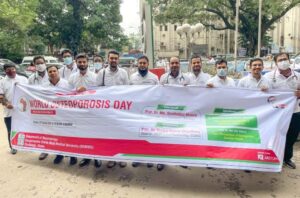
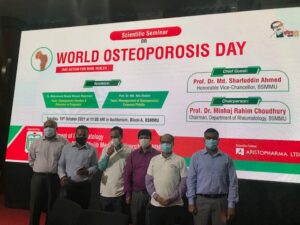
To celebrate World Osteoporosis Day, APCO Member and Chairman, Department of Rheumatology, Bangabandhu Sheikh Mujib Medical University, Professor Minhaj Rahim Choudhury, Dhaka, Bangladesh, organised a university campus rally attended by 30 people due to COVID-19 restrictions, followed by an inaugural scientific program on osteoporosis. Held in a large auditorium, the scientific program attracted 250 participants, including doctors, residents and nurses. The program covered various ‘hurdles and the dilemma presented by the diagnosis of osteoporosis’, and the ‘management of osteoporosis’. Each speaker presented for 30 minutes, followed by a five-person multidisciplinary panel discussion involving two rheumatologists, an obstetrician and gynaecologist, an internal medicine specialist and an orthopaedic surgeon, and a final Q&A session.

“It was a very vibrant inaugural scientific session staged to mark World Osteoporosis Day,” said Prof Choudhury.
Incredible India

APCO Executive Committee Member and Head, Department of Endocrinology, Postgraduate Institute of Medical Education and Research, Professor Sanjay Kumar Bhadada, Chandigarh, India, together with his medical team, partnered with Bristol Myers Squibb (BMS) on World Osteoporosis Day, to perform BMD testing of 150 patients over 60 years of age using a mobile Hologic DEXA van.

Importantly, in a bid to further strengthen stakeholder collaboration in the bone health field in India, Prof Bhadada’s Department of Endocrinology also announced their development of the country’s first, national Osteoporosis Registry of India (ORI).

Endless Discovery

The Japan Osteoporosis Foundation coordinated three events in three cities in Japan to mark World Osteoporosis Day, including:

Kanazawa (Ishikawa Prefecture)

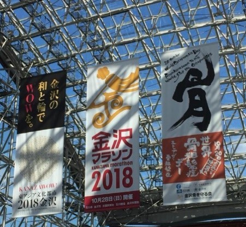
Digital signage (including video distribution), illumination of the Kanazawa Station Tsuzumi-mon Gate in blue, and a giant banner positioned prominently at Kanazawa Central railway station, Kanazawa (north-western Japan).

Matsumoto (Nagano Prefecture)

Illumination of the revered national icon, Matsumoto Castle, in Matsumoto (central Honshu, Japan) in blue, and an educational lecture for members of the Matsumoto community.

Kure (Hiroshima Prefecture)

An educational osteoporosis program was held in Kure, located on the Seto Inland Sea, south-western Honshu, Japan, comprising four educational lectures titled ‘Risk and countermeasures for fractures in Corona’; ‘Efforts to prevent the aggravation of osteoporosis in Kure City’, ‘Effective exercises to prevent fractures’; and ‘A recipe to strengthen bones’. A series of supporting event booths offered members of the community complementary oral care consultations from Kure City Dental Association representatives, drug consultations from Kure City Pharmacy Association representatives, and bone mineral density (BMD) measurements and bone health consultations from public health nurses. Each of the booths were further flanked by a health foods and supplements exhibition.

To further maximise awareness of World Osteoporosis Day, the outdoor maritime exhibition involving the battleship Matsu at Yomato Museum, and the outdoor exhibition featuring the submarine Akishio at Tetsu no Kujirakan, were also both illuminated in blue.

Malaysia Truly Asia

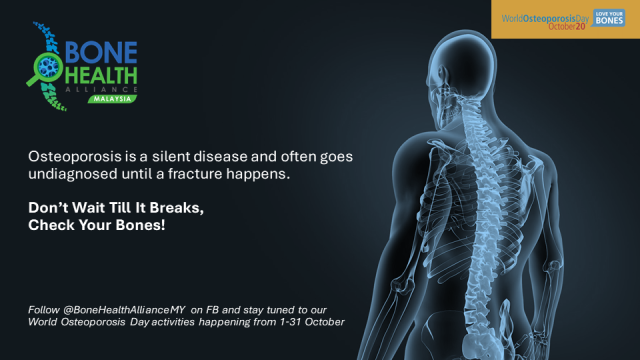
Coinciding with World Osteoporosis Day, The Bone Health Alliance Malaysia (BHAM) released the findings from their bone health and osteoporosis survey, which assessed the awareness, knowledge, and lifestyle habits of Malaysians. The survey sought to raise public awareness of bone health; to counter the misconception that osteoporosis is part of the natural ageing process, and cannot be prevented, or treated; and to educate Malaysians on how to best maintain healthy bones.

Harnessing the survey findings, BHAM announced the launch of ‘Love Your Bones’ – a virtual campaign designed to educate patients, caregivers, and those at high-risk on how to best care for their bones throughout all stages of life; to dispel common misconceptions about bone health; to raise community interest in osteoporosis; and heighten recognition of the disease as a national health priority.

“Osteoporosis affects men and women, but women are at increased risk due to lower level of hormones in menopause, with at least one in three women over 50 years experiencing osteoporotic fractures at some stage during their lives,” said Dato’ Dr Lee Joon Kiong, APCO Member, President of the Fragility Fracture Network Malaysia, and Consultant Orthopaedic Surgeon, Beacon Hospital, Selangor, Malaysia.

“It is important to educate the public on the role of lifestyle modifications through proper nutritional intake and staying active to ensure good bone health, especially women and older people.”
It’s Beautiful, It’s Pakistan

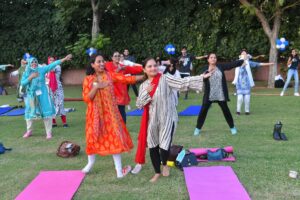
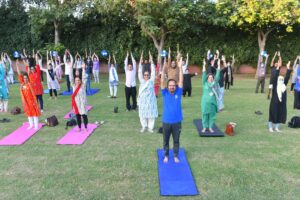
Given the  multitude of challenges posed by the ongoing COVID-19 pandemic, causing significant physical and mental stress and fatigue, and compromising posture, stamina, immunity and bone health, the Bone and Mineral Disease Research Group at Aga Khan University, Karachi, Pakistan, chose to stage a fun and educational ‘physical event’ this year to mark World Osteoporosis Day. Conducted pool-side at AKU’s Sports and Rehabilitation Centre, the open air event involving yoga and Zumba, attracted many participants who relaxed, laughed and danced the night away. “Being able to let loose after a long day of work in an enjoyable activity with other people did wonders for all involved who have been deprived of such interaction during COVID,” said  APCO Executive Committee Member and Professor in the Department of Pathology and Laboratory Medicine, Aga Khan University Hospital, Dr. Aysha Habib Khan, Pakistan.

The event concluded with a brief speech on the International Osteoporosis Foundation’s (IOF) five principles of preventing osteoporosis, and the offer of a “lassi” – a traditional, calcium-rich beverage made from yoghurt and milk.

“Our session closely followed the theme ‘Love your bones and protect your future’ by encouraging people to take charge of their health, and to take timeout from their busy schedules to exercise and decompress.

“The event spoke for itself and got people to take their bone health seriously in a fun, interactive manner,” Dr. Habib Khan said.
 

Its More Fun in the Philippines!

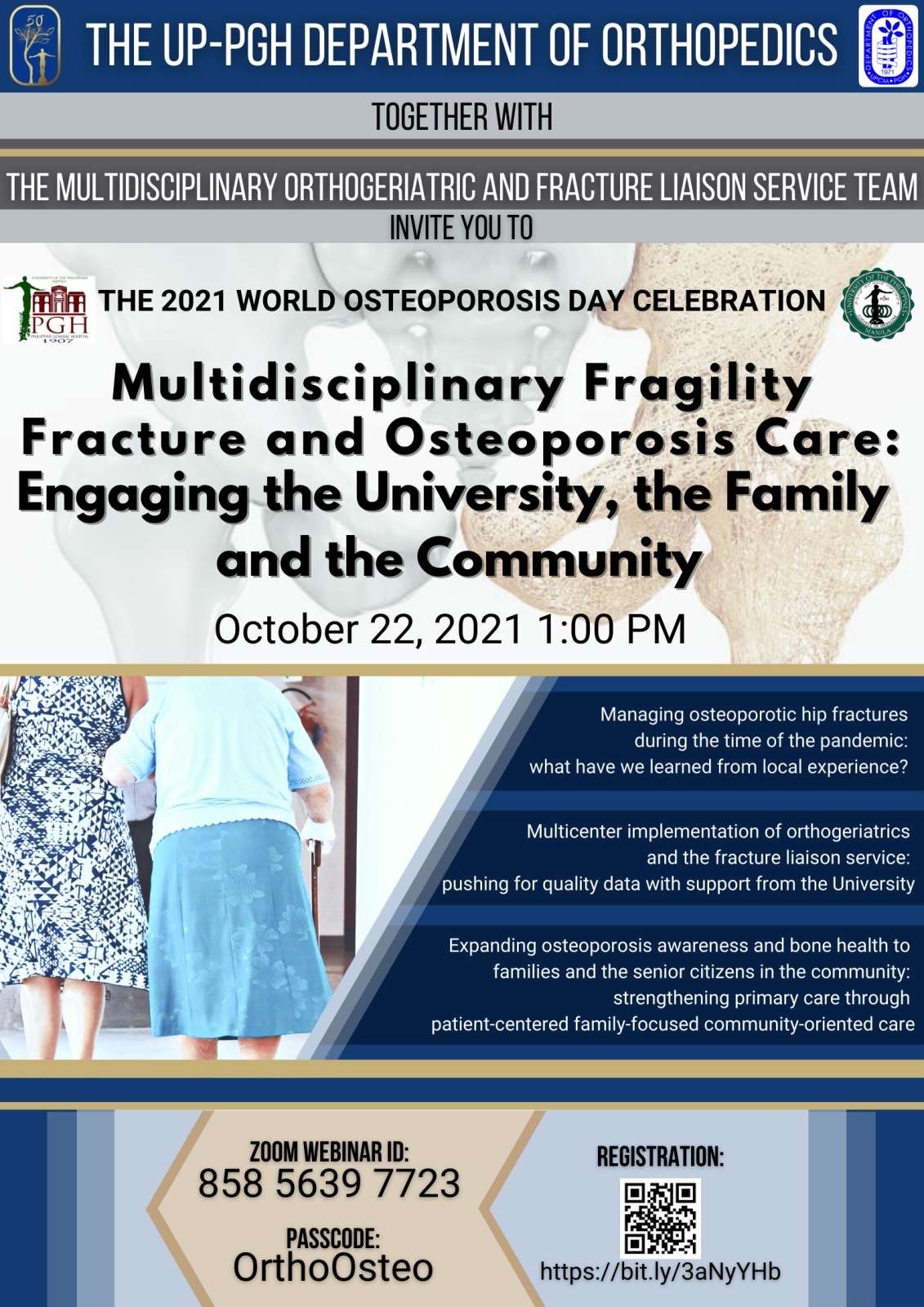
On October 22, 2021, The Department of Orthopedics and the Multidisciplinary Orthogeriatric-Fracture Liaison Service hosted the University of the Philippines ‘Philippine General Hospital annual World Osteoporosis Day webinar’, titled ‘Multidisciplinary fragility fracture and osteoporosis care: engaging the university, the family and the community’.

The webinar reinforced the importance of bone health for all members of the community, which involves all members of the family caring for their bone health, and effectively managing the bone health of the elderly. The webinar further explored how, through community medicine, the University of the Philippines can help promote bone health, nation-wide.

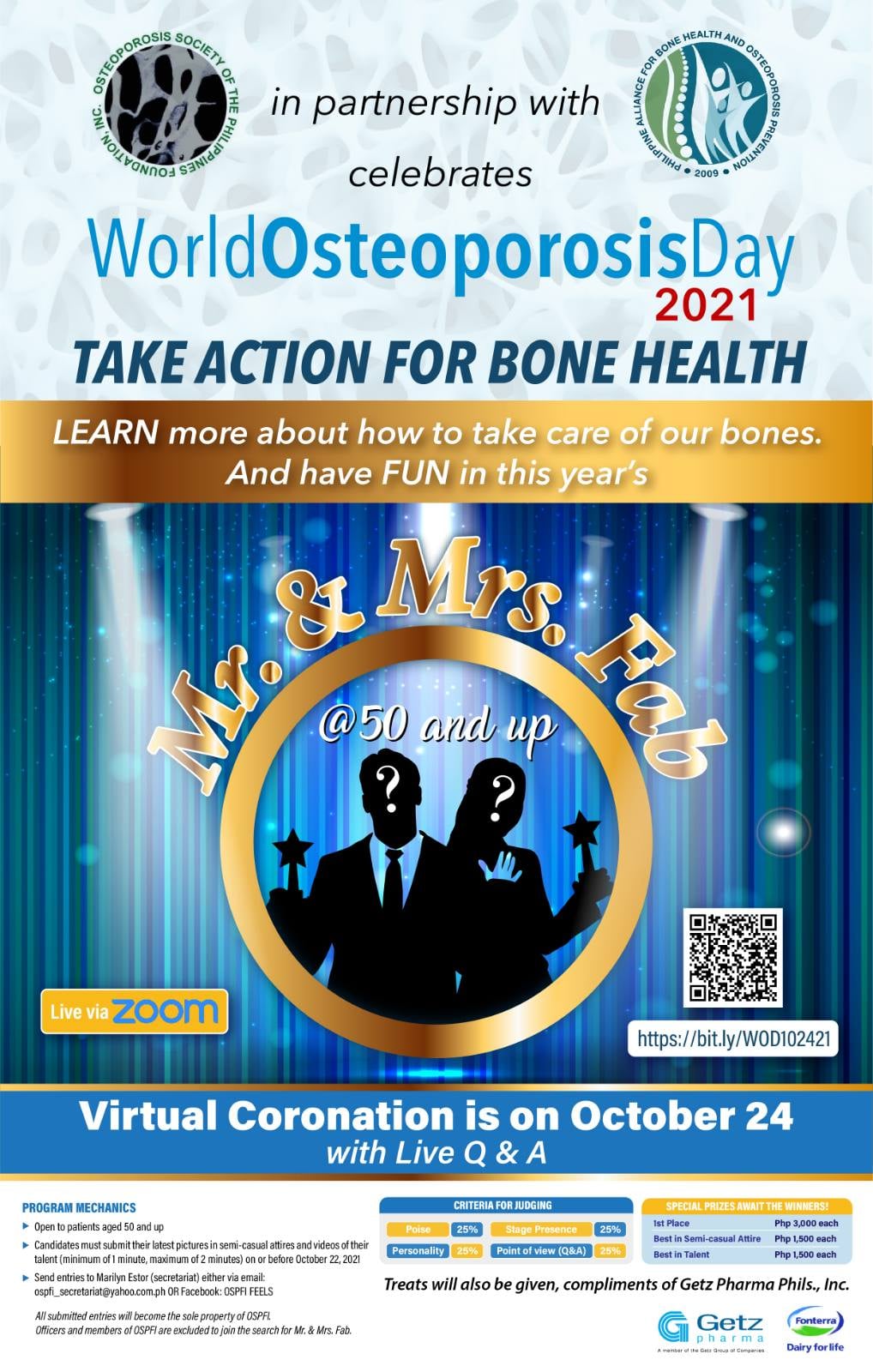
In addition, the Osteoporosis Society of the Philippines Foundation Inc. partnered with the Philippine Alliance For Bone Health and Osteoporosis Prevention, to host a World Osteoporosis ‘virtual’ celebration on Sunday, October 24 via a Facebook live event. Targeting those aged 50 years and over, the event strove to educate this demographic on how to take care of their bones, and provided information on osteoporosis.
Passion Made Possible in Singapore

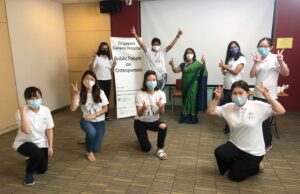
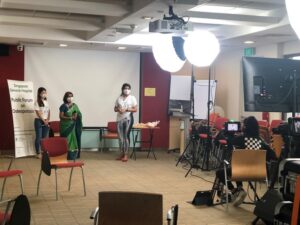
To commemorate World Osteoporosis Day this year, the Osteoporosis and Bone Metabolism Unit at Singapore General Hospital (SGH) organised with passion and gusto, a virtual public forum on osteoporosis titled ‘Stop osteoporosis in its tracks’ on October 16, 2021. It was the 14th year that the forum, a much-anticipated event by the Singaporean community, was conducted by the dynamic Unit – the oldest and only one of its kind in Singapore dedicated to clinical care and research in osteoporosis and other disorders of bone metabolism. Filmed on site and live streamed, the forum attracted a substantial 1,250 Zoom participants and another 2,2200 views on Facebook.

After a general introduction by Associate Consultant, Dr Ann Kwee, an entertaining lecture on osteoporosis was presented by APCO Chairperson, IOF Board Member, and Director of the Osteoporosis and Bone Metabolism Unit, Singapore General Hospital, Professor Manju Chandran.

Physiotherapist, Dr Cindy Ng, followed with an enlightening session on the role of exercise in osteoporosis. Yoga therapist, Ms Abha Baja, next provided a wonderful educational talk and demonstration of the safe practice of the ancient discipline of yoga, to help prevent injury and fractures in those with osteoporosis.

Next, Senior Endocrinology Resident, Dr Sarah Tan, interviewed a remarkable 83-year young, retired school teacher living with osteoporosis, Mrs Lohambal Rajakrishnan, who has not let her disease beat her. Virtual event participants were then invited to join dancer, Ms Sneha Yadav, in an energetic, foot-tapping Zumba session in their respective homes. The event concluded with a Q&A session moderated by the unit’s two osteoporosis nurses, Huang Xiao Feng and Liu Xiao Ming. To watch the recording of the fun, educational event, click here.

Prior to the public forum, Prof Manju Chandran was interviewed on October 14 by Daniel Martin on the regional news channel broadcast out of Singapore, CNA 938 Health Matters, on Osteoporosis the Silent Disease. To watch a snippet of the interview, please head to: https://www.facebook.com/CNA938/videos/345393687362714
International Osteoporosis Foundation (IOF)

This year, under the ‘Take Action For Bone Health’ banner, the IOF continued to promote global advocacy and support the national campaigns of its more than 265 member societies. The revamped World Osteoporosis Day website hosted many new multi-lingual resources, including posters, infographics, and social media banners, that were widely shared throughout the world. The campaign attracted immense global interest, securing a phenomenal 10,000+ resource downloads, almost 100,000 website page views, and more than 260 events and campaigns listed to date on the global map of World Osteoporosis Day events.

The three key messages at the core of World Osteoporosis Day 2021 global campaign echoed consistently throughout the IOF’s global media releases, included:

  1. Calling on patients to ‘Take action for bone health’, which is more important now than ever due to the impact of the COVID-19 pandemic on lifestyle, and restricted access to testing and treatment. This included urging awareness of personal risk factors through the IOF Osteoporosis Risk Check Tool;
  2. Urging healthcare professionals and policymakers to prioritize secondary fracture prevention, and the implementation of fracture liaison services (FLS), which is essential to:
  3. Highlighting the burden of osteoporosis and fragility fractures, including through the launch of a new digital patient exhibition Unbreakable, and the updated IOF Global Patient Charter (soon to be available in multiple languages).
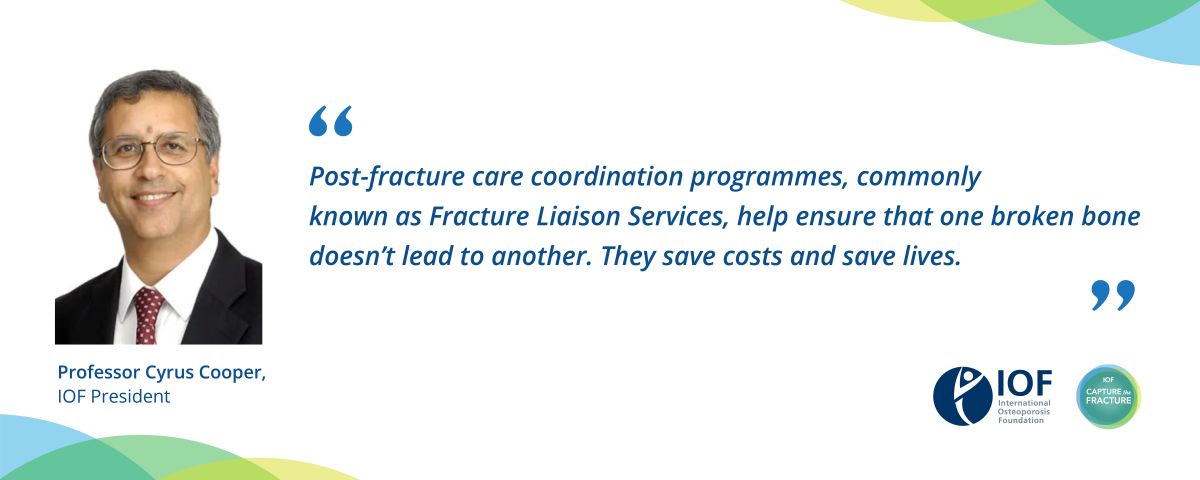
Together, our voices amplify the call to action addressed to individuals, healthcare professionals, and health authorities alike. Together, we can make a difference.
 

News

Blog Thumbnail WCO 2026

APCO’s Strong Showing in Prague: Highlights from WCO-IOF-ESCEO 2026

Thumbnail

When A Course Becomes an Educational Fiesta! APCO Successfully Delivers the 1st Asia Pacific wide New IOF Fundamentals of Osteoporosis Course

Blog and LinkedIn Thumbnail ONZ Stronger Together strategy

Stronger Together: A New Zealand perspective on building a life-course approach to bone health in the Asia Pacific

Tokyo Blog Thumbnail

APCO at the 9th IOF Asia-Pacific Bone Health Conference: Advancing Bone Health Together

Blog Final Thumbnail WHO Benchmark

Setting Global Standards for Hip-Fracture Care: Why the New WHO Benchmarks Matter for the Future of Bone Health

Low Calcium Intake

Reference 1: This review examined calcium intake among adults around the world and found that many populations do not consume enough calcium to support good bone health. The authors highlight that low calcium intake is particularly common in many Asian countries, where average intakes are often well below recommended levels. Because calcium is essential for building and maintaining strong bones, inadequate intake may increase the risk of osteoporosis and fractures. The study emphasises the importance of promoting calcium rich foods and other practical ways to help people meet their daily calcium needs.

Citation: Balk EM, Adam GP, Langberg VN, et al. “Global dietary calcium intake among adults: a systematic review.” Osteoporos Int. 2017 Dec;28(12):3315-3324. doi: 10.1007/s00198-017-4230-x. Epub 2017 Oct 12. Erratum in: Osteoporos Int. 2018 May;29(5):1223. doi: 10.1007/s00198-018-4447-3. PMID: 29026938; PMCID: PMC5684325.


Reference 2: This review explores the important role of calcium in maintaining healthy bones throughout life. The authors explain that adequate calcium intake helps build and maintain bone strength, while long term low intake may contribute to bone loss and increase the risk of fractures. The paper also discusses the importance of obtaining calcium from a balanced diet, with supplements considered when dietary intake is insufficient. Overall, the review reinforces that meeting daily calcium needs is an important part of supporting lifelong bone health.

Citation: Cormick G, Belizan JM. “Calcium Intake and Health.” Nutrients. 2019 Jul 15;11(7):1606. doi: 10.3390/nu11071606. PMID: 31311164; PMCID: PMC6683260.


Reference 3: This review explores how common calcium deficiency is around the world and the impact it can have on health. The authors explain that many people do not consume enough calcium, particularly in low and middle income countries, increasing the risk of poor bone health and fractures. The paper highlights the importance of consuming enough calcium throughout life to help build and maintain strong bones. It also emphasises the need for practical strategies, such as improving access to calcium rich foods, fortified foods, and nutrition education, to help people meet their daily calcium needs.

Citation: Shlisky J, Mandlik R, Askari S, et al. “Calcium deficiency worldwide: prevalence of inadequate intakes and associated health outcomes.” Ann N Y Acad Sci. 2022 Jun;1512(1):10-28. doi: 10.1111/nyas.14758. Epub 2022 Mar 5. PMID: 35247225; PMCID: PMC9311836.

High Sodium Intake

Reference 1: This review explored whether eating too much salt affects bone health in postmenopausal women. The authors found that while high salt intake may increase calcium loss from the body, there is currently not enough high quality evidence to clearly determine its long term effects on bone mineral density or fracture risk. The paper highlights the need for more research to better understand this relationship. In the meantime, following general recommendations to limit excessive salt intake remains an important part of maintaining overall health.

Citation: Imash D, Gusmanov A, Chan MY. “High salt intake and bone health in postmenopausal women: exposing the lack of studies – a systematic review and meta-analysis.” Front Endocrinol (Lausanne). 2025 Nov 19;16:1694539. doi: 10.3389/fendo.2025.1694539. PMID: 41347127; PMCID: PMC12672310.


Reference 2: This study explored whether salt intake was linked to bone health in postmenopausal women in southern India. The authors found that women who consumed more salt were more likely to have weaker bones, poorer bone structure, osteoporosis, and vertebral fractures. These findings suggest that excessive salt intake may be associated with poorer bone health in this population. The study adds to growing evidence that a balanced diet, including limiting excess salt, may help support healthy bones.

Citation: John R, Cherian KE, Kapoor N, et al. “Excess dietary salt is associated with an altered bone strain index, degraded bone microarchitecture, vertebral fractures, and increased prevalence of osteoporosis in postmenopausal women – A study from a teaching hospital in southern India.” Aging Med (Milton). 2024 Oct 10;7(5):606-613. doi: 10.1002/agm2.12360. PMID: 39507226; PMCID: PMC11535168.

Lower Protein Intake Among Older Adults

Reference 1: This review explored how protein intake and regular exercise can help slow the progression of age-related muscle loss in older adults living in the community. The authors found that combining adequate protein with strength or resistance exercise was more effective than either approach alone in helping to maintain muscle strength and physical function. The paper highlights that preserving muscle health is important for reducing the risk of falls, fractures, and loss of independence. It also reinforces the value of healthy lifestyle habits in supporting active and healthy ageing.

Citation: Li L, He Y, Jin N, Li H, Liu X. “Effects of protein supplementation and exercise on delaying sarcopenia progression in Asian community-dwelling older adults.” Food Chem X. 2022 Jan 20;13:100210. doi: 10.1016/j.fochx.2022.100210. PMID: 35128383; PMCID: PMC8808080.


Reference 2: This consensus paper encourages a broader focus on maintaining muscle health throughout life rather than only identifying or treating sarcopenia after it develops. The authors explain that healthy muscles are essential for mobility, balance, independence, and overall wellbeing, especially as people age. The paper highlights the importance of regular physical activity, good nutrition, and early action to help preserve muscle strength and function. It also encourages healthcare professionals and the public to view muscle health as an important part of healthy ageing alongside bone health.

Citation: Chen LK, Hsiao FY, Akishita M, et al. “A focus shift from sarcopenia to muscle health in the Asian Working Group for Sarcopenia 2025 Consensus Update.” Nat Aging. 2025 Nov;5(11):2164-2175. doi: 10.1038/s43587-025-01004-y. Epub 2025 Nov 4. PMID: 41188603.

High Prevalence of Lactose Intolerance

Reference 1: This review explores how lactose intolerance may affect bone health. The authors explain that people who avoid dairy because of lactose intolerance may miss out on important nutrients, particularly calcium, if these nutrients are not replaced from other foods. The paper highlights that getting enough calcium is important for maintaining strong bones and reducing the risk of fractures. It also emphasises that there are many ways to meet calcium needs, including lactose free dairy products and other calcium rich foods.

Citation: Hodges JK, Cao S, Cladis DP, Weaver CM. “Lactose Intolerance and Bone Health: The Challenge of Ensuring Adequate Calcium Intake.” Nutrients. 2019 Mar 28;11(4):718. doi: 10.3390/nu11040718. PMID: 30925689; PMCID: PMC6521087.


Reference 2: This review explores whether drinking milk can help support bone health in Asian populations, particularly those at higher risk of osteoporosis. The authors highlight that many people in Asia consume less milk than recommended, which may contribute to lower calcium intake and poorer bone health. The paper explains that milk provides important nutrients for strong bones and discusses practical options for people who cannot tolerate regular milk, such as lactose free milk and yoghurt. Overall, the review suggests that finding suitable ways to include dairy or alternative calcium rich foods in the diet may help support lifelong bone health.

Citation: Jiao H, Xu Y, Zhang Y, et al. “Is it advisable for Asians to drink milk, especially those at risk of osteoporosis?” Front Nutr. 2025 Jun 25;12:1586623. doi: 10.3389/fnut.2025.1586623. PMID: 40635901; PMCID: PMC12239142.


Reference 3: This review explores ways to protect bone health in populations where calcium and vitamin D intake is often too low. The authors explain that getting enough of these nutrients is essential for building and maintaining strong bones, yet deficiencies remain common in many parts of the world. The paper highlights that healthy eating, safe sun exposure, regular physical activity, and, where needed, fortified foods or supplements can all help support bone health. It also emphasises the importance of public health efforts to improve awareness and make nutritious foods more accessible, particularly for people at greater risk of osteoporosis.

Citation: Yeum KJ, Ju S, Choe U. “Strategies for preventing bone loss in populations with inadequate calcium and vitamin D intake.” Nutr Res Pract. 2025 Apr;19(2):155-169. doi: 10.4162/nrp.2025.19.2.155. Epub 2025 Mar 13. PMID: 40226767; PMCID: PMC11982687.

Vitamin D Deficiency Despite Sunshine

Reference 1: This review examined how common vitamin D deficiency is around the world and found that it remains a widespread public health concern. The authors explain that many people do not get enough vitamin D because of factors such as limited sun exposure, diet, and lifestyle. As vitamin D plays an important role in maintaining strong bones and muscles, low levels may increase the risk of poor bone health. The study highlights the importance of improving awareness and ensuring people have adequate vitamin D through safe sun exposure, diet, fortified foods, or supplements when needed.

Citation: Cui A, Zhang T, Xiao P, Fan Z, Wang H, Zhuang Y. “Global and regional prevalence of vitamin D deficiency in population-based studies from 2000 to 2022: A pooled analysis of 7.9 million participants.” Front Nutr. 2023 Mar 17;10:1070808. doi: 10.3389/fnut.2023.1070808. PMID: 37006940; PMCID: PMC10064807.


Reference 2: This review examined vitamin D levels among adults living in South Asia and found that vitamin D deficiency is very common across the region. The authors explain that factors such as limited sun exposure, lifestyle, skin pigmentation, and diet may all contribute to low vitamin D levels. Because vitamin D is essential for maintaining healthy bones and muscles, addressing this deficiency is an important part of supporting lifelong bone health. The study highlights the need for greater awareness and practical strategies to help people achieve adequate vitamin D levels.

Citation: Siddiqee MH, Bhattacharjee B, Siddiqi UR, MeshbahurRahman M. “High prevalence of vitamin D deficiency among the South Asian adults: a systematic review and meta-analysis.” BMC Public Health. 2021 Oct 9;21(1):1823. doi: 10.1186/s12889-021-11888-1. PMID: 34627207; PMCID: PMC8501935.

Vegetarian and Plant-Based Diets

Reference 1: This review explores how vegetarian diets may affect bone health. The authors explain that while well planned vegetarian diets can provide many health benefits, they may also be lower in important nutrients such as calcium, vitamin D, protein, and vitamin B12 if not carefully balanced. The paper highlights that these nutrients play an important role in maintaining strong bones and reducing the risk of fractures. It also emphasises that people following vegetarian diets can support their bone health by choosing a varied, nutrient-rich diet and including fortified foods or supplements when needed.

Citation: Falchetti A, Cavati G, Valenti R, et al. “The effects of vegetarian diets on bone health: A literature review.” Front Endocrinol (Lausanne). 2022 Aug 5;13:899375. doi: 10.3389/fendo.2022.899375. PMID: 35992115; PMCID: PMC9388819.


Reference 2: This review examines how vegetarian diets may influence bone mineral density, a measure of bone strength. The authors explain that people following vegetarian diets may have lower bone mineral density if they do not consume enough nutrients that are important for healthy bones, such as calcium, vitamin D, and protein. However, the paper also highlights that a well planned vegetarian diet can support good bone health when these nutritional needs are met. The review emphasises the importance of choosing a balanced diet to help maintain strong bones throughout life.

Citation: Chuang TL, Lin CH, Wang YF. “Effects of vegetarian diet on bone mineral density.” Tzu Chi Med J. 2020 Sep 16;33(2):128-134. doi: 10.4103/tcmj.tcmj_84_20. PMID: 33912409; PMCID: PMC8059457.


Reference 3: This review examined how vegan and vegetarian diets may affect bone mineral density and fracture risk. The authors found that people following plant based diets, particularly vegan diets, may have lower bone mineral density and a higher risk of fractures if they do not get enough nutrients that support bone health. The paper highlights the importance of consuming adequate calcium, vitamin D, protein, and other key nutrients when following a plant based diet. It also emphasises that well planned vegetarian and vegan diets can support healthy bones when nutritional needs are carefully met.

Citation: Iguacel I, Miguel-Berges ML, Gomez-Bruton A, Moreno LA, Julian C. “Veganism, vegetarianism, bone mineral density, and fracture risk: a systematic review and meta-analysis.” Nutr Rev. 2019 Jan 1;77(1):1-18. doi: 10.1093/nutrit/nuy045. PMID: 30376075.

I Think I Might Be at Risk of Osteoporosis

Why should I ask?

Osteoporosis is often called the “silent disease” because there are usually no symptoms until a fracture occurs. If you have risk factors, it is important to discuss your bone health before a fracture happens. Some common risk factors include but not limited to: Family history, Smoking, Alcohol, Low Body Weight, Age and Previous Falls.

Questions to ask your Doctor

1Am I at risk of osteoporosis?
2Should I have a bone health assessment?
3Should I have a DXA scan?
4What are my personal risk factors for osteoporosis and fractures?
5Are any of my medications affecting my bone health?
6What lifestyle changes can help protect my bones?

I am experiencing Height Loss, Stooped Posture, or Bone Pain

Why should I ask?

Losing height, developing a stooped posture or experiencing persistent back pain may not simply be part of ageing. These symptoms can sometimes be caused by vertebral fractures that happen without a major injury.

Questions to ask your Doctor

1Could my symptoms be caused by osteoporosis?
2Should I have spinal imaging or a VFA?
3Could I have had a spinal fracture without realising it?
4What treatments are available if I have vertebral fractures?
5How can I reduce my risk of future fractures?

I have Risk Factors but my DXA Scan was Normal

Why should I ask?

A normal bone density result does not always mean your bones are healthy. Some people may still be at increased fracture risk because of other risk factors or underlying conditions that affect bone quality.

Questions to ask your Doctor

1Does a normal DXA scan mean I cannot have osteoporosis?
2Why am I still at risk of fractures?
3Should my fracture risk be assessed using other tools?
4Are there additional tests I should have?
5How often should my bone health be reviewed?

I am worried about being on an Osteoporosis Medication

Why should I ask?

Many people are concerned about possible side effects of osteoporosis medicines. Understanding both the benefits and risks can help you make an informed decision with your doctor.

Questions to ask your Doctor

1Why are you recommending this medication?
2What are the common side effects?
3How common are the serious side effects?
4What happens if I decide not to take treatment?
5Are there other treatment options that may be suitable for me?

I am going through Menopause

Why should I ask?

Bone loss accelerates during and after menopause because of declining oestrogen levels. Acting early can help maintain bone strength and reduce future fracture risk.

Questions to ask your Doctor

1Does menopause increase my risk of osteoporosis?
2Should I have a DXA scan?
3Am I getting enough calcium and vitamin D?
4Would hormone therapy or another treatment benefit me?
5What lifestyle changes can help protect my bones?

I Have Another Medical Condition That May Affect My Bones

Why should I ask?

Some medical conditions can weaken bones, affect bone quality or interfere with the body’s ability to absorb important nutrients. Others may increase your risk of falls and thus fractures. These include diabetes, rheumatoid arthritis, thyroid disease, kidney disease, celiac disease among others.

Questions to ask your Doctor

1Does my medical condition increase my risk of osteoporosis or fractures?
2Should I have a DXA scan or other bone health tests?
3Are there treatments that can help protect my bones?
4Do I need to see a bone specialist?
5How often should my bone health be monitored?

I take Long-Term Medicines

Why should I ask?

Some medicines can reduce bone strength or increase fracture risk, particularly if they are taken over a long period. Your doctor can help determine whether you need additional monitoring or treatment.

Questions to ask your Doctor

1Could this medication affect my bones?
2Should I have a DXA scan?
3Do I need calcium or vitamin D supplements?
4Should I take medication to help protect my bones?
5How often should my bone health be reviewed while taking this medication?

I am Falling More Often and am Worried about my Balance

Why should I ask?

Most fragility fractures occur after a fall. Identifying the causes of falls and improving balance and strength can significantly reduce your fracture risk.

Questions to ask your Doctor

1Why might I be falling more often?
2Could my medications be contributing?
3Should my vision or hearing be checked?
4Would physiotherapy or balance training help?
5Can I be referred to a falls prevention programme?

I am an Older Man

Why should I ask?

Although osteoporosis is often thought of as a women’s disease, men can also develop osteoporosis and experience serious fractures. Unfortunately, osteoporosis in men is frequently under-recognised and underdiagnosed.

Questions to ask your Doctor

1Can men develop osteoporosis?
2Should I have a bone density test?
3What are my personal risk factors?
4Do I need treatment to reduce my fracture risk?
5Are there lifestyle changes I should make?

My Blood Tests show Low Vitamin D and/or Low Calcium

Why should I ask?

Vitamin D and calcium play essential roles in maintaining healthy bones. Low levels may contribute to bone loss and increase the risk of fractures if left untreated.

Questions to ask your Doctor

1What may have caused my low vitamin D and/or calcium levels?
2Do I need supplements?
3How much calcium and vitamin D should I be taking?
4Should my levels be checked again?
5Are there other tests needed to identify the underlying cause of my my low vitamin D and/or calcium levels?