
Could It Be a Rare Bone Disorder?
Some people may have a rare bone disorder (RBD) that can cause weak bones or repeated fractures. These conditions may require different investigations or treatment.
The conditions shown are just some examples of rare bone disorders and do not represent a complete list.
Osteogenesis Imperfecta (OI)
An inherited disorder that affects the body’s ability to produce strong bone.
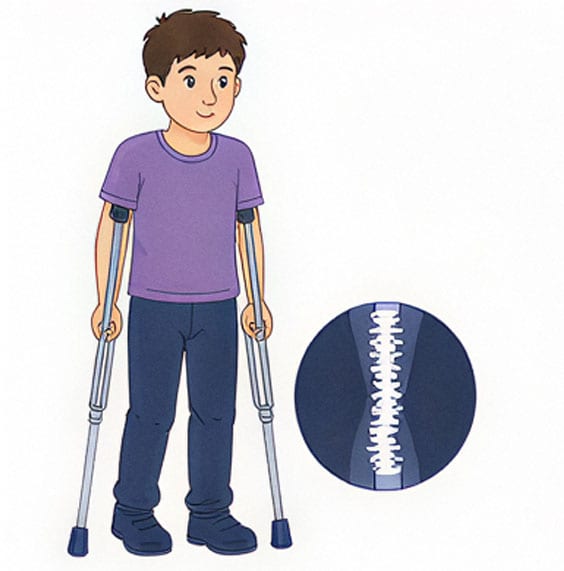
Typical Signs and Symptoms
- Frequent fractures beginning in childhood
- Fractures after minor injuries
- Blue or grey tint to the whites of the eyes (in some people)
- Hearing loss in adulthood
- Loose joints
- Short stature
- Curved spine
- Family history of similar problems
Questions you may wish to ask your Doctor if you have one or more of the above symptoms.
- Could my fractures or symptoms be due to OI?
- Would genetic testing or referral to a specialist be helpful?
Hypophosphatasia (HPP)
A rare genetic disorder affecting bone mineralization and other body systems.
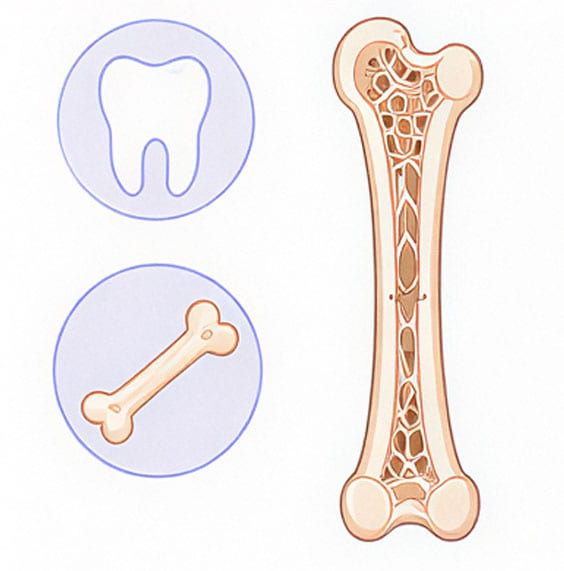
Typical Signs and Symptoms
- Recurrent fractures
- Persistent bone pain
- Poor fracture healing
- Early loss of adult teeth
- Frequent dental problems
- Muscle weakness
- Very low alkaline phosphatase (ALP)
Questions you may wish to ask your Doctor if you have one or more of the above symptoms.
- Could my low ALP level indicate hypophosphatasia?
- Should I have genetic testing or see a metabolic bone specialist?
X-linked Hypophosphatemia (XLH)
An inherited disorder that causes phosphate loss, affecting bone and teeth development.
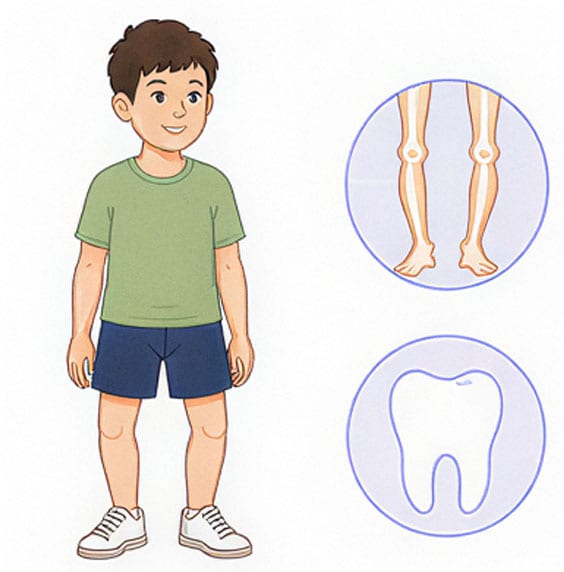
Typical Signs and Symptoms
- Bowed legs
- Bone pain
- Muscle weakness
- Short stature
- Walking diffculties
- Dental abscesses
- Fatigue
- Low blood phosphate
Questions you may wish to ask your Doctor if you have one or more of the above symptoms.
- Could my symptoms be due to XLH?
- Should my phosphate levels or genetic test be checked?
Fibrous Dysplasia (FD)
A condition where normal bone is replaced with fibrous tissue.
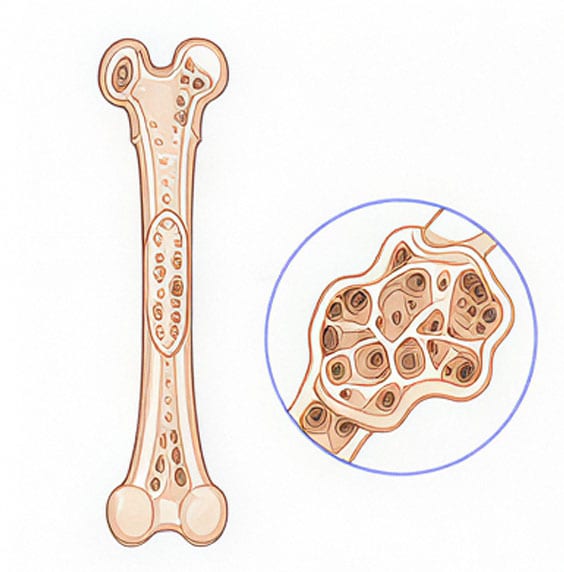
Typical Signs and Symptoms
- Bone pain
- Recurrent fractures
- Bone deformities
- Unequal limb length
- Curved bones
- Facial bone enlargement (in some people)
Questions you may wish to ask your Doctor if you have one or more of the above symptoms.
- Could fibrous dysplasia be causing my symptoms?
- Would imaging or referral to a specialist be helpful?
Tumour-Induced Osteomalacia (TIO)
A rare disorder caused by a small tumour that leads to phosphate loss and soft bones.
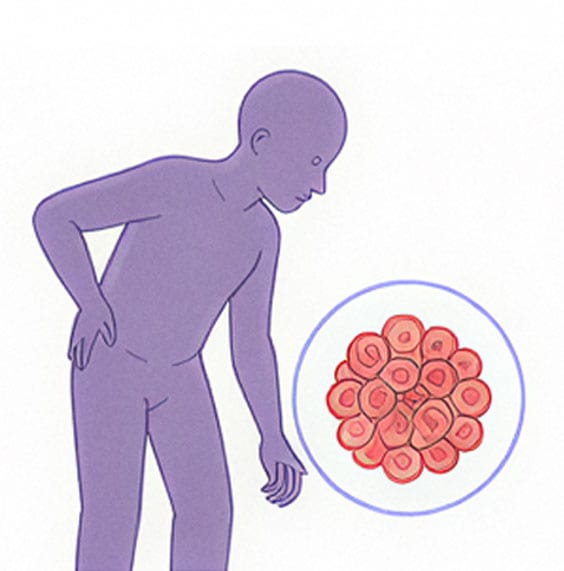
Typical Signs and Symptoms
- Progressive bone pain
- Muscle weakness
- Diffculty walking
- Fatigue
- Recurrent fractures
- Low blood phosphate
- Symptoms worsen over months or years
Questions you may wish to ask your Doctor if you have one or more of the above symptoms.
- Could my hidden tumour be causing my symptoms?
- Should I have tests to check my phosphate levels?
Osteomalacia
A condition where bones are soft due to low mineralization, often linked to vitamin D deffciency or phosphate problems. Osteomalacia may be mistaken for osteoporosis but requires different treatment.
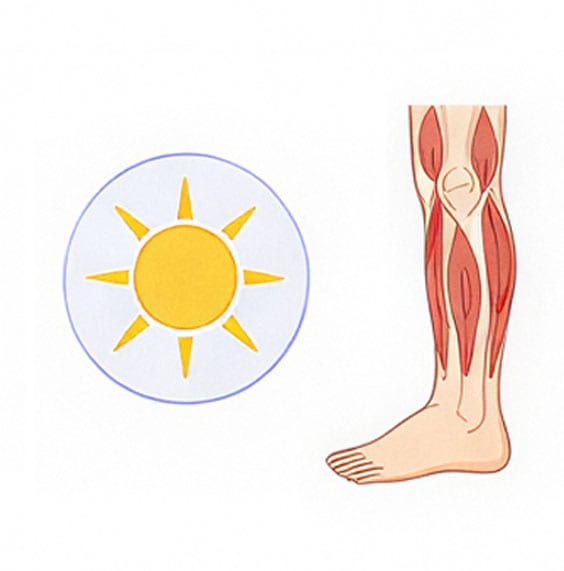
Typical Signs and Symptoms
- Diffuse bone pain
- Muscle weakness
- Difficulty climbing stairs
- Difficulty getting up from a chair
- Waddling gait
- Fragility fractures
- Vitamin D defficiency or phosphate abnormalities (depending on the cause)
Questions you may wish to ask your Doctor if you have one or more of the above symptoms.
- Could I have osteomalacia instead of osteoporosis?
- Should my vitamin D and phosphate levels be checked?
Pregnancy and Lactation-Associated Osteoporosis (PLO)
A rare condition of bone loss linked to pregnancy or breastfeeding.
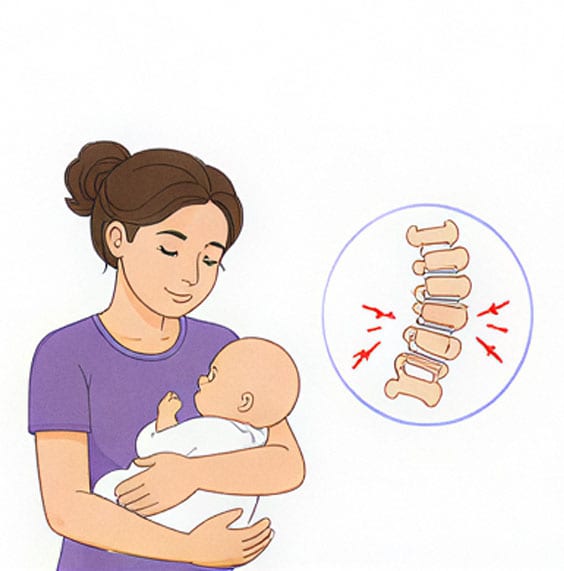
Typical Signs and Symptoms
- Severe back pain during late pregnancy or shortly after childbirth
- Vertebral fractures
- Height loss
- Difficulty lifting or caring for the baby because of pain
- Unexpected fractures during pregnancy or breastfeeding
Questions you may wish to ask your Doctor if you have one or more of the above symptoms.
- Could my back pain or fractures be related to PLO?
- What tests or treatment options are available?
Early-Onset Osteoporosis
Osteoporosis that develops before age 50 can be caused by many factors, including rare genetic conditions.
Typical Signs and Symptoms
- Osteoporosis before age 50
- Fragility fractures at a young age
- Recurrent fractures
- Few or no traditional risk factors
- Strong family history of osteoporosis or fractures
- Can include inherited disorders or, more rarely, Juvenile Idiopathic Osteoporosis
Questions you may wish to ask your Doctor if you have one or more of the above symptoms.
- Why did I develop osteoporosis at such a young age?
- Should I be evaluated for an underlying cause?

Many of these signs and symptoms can occur in other conditions. If any of these situations sound familiar, write down your symptoms and history and discuss them with your doctor. Your doctor can determine if further tests or referral to a specialist are needed.
Open Access References
Brought to you by APCO

Supported by UCB

Legal Disclaimer
The information provided on the APCO BoneConnect (“Platform”) is intended for educational and informational purposes only. It is designed to improve understanding of bone health, osteoporosis, fragility fractures, and related bone conditions. It is not intended to provide medical advice or to diagnose, prevent, monitor, or treat any medical condition. Many bone conditions, as well as many other medical conditions, can present with similar signs and symptoms. The information on this Platform cannot determine the cause of your symptoms or whether you have a particular condition. Nothing on this Platform creates a doctor-patient relationship or any other professional relationship between APCO and you.
If any of the symptoms, experiences, or situations described on this Platform apply to you, keep a record of them and discuss them with your doctor or another qualified healthcare professional. They can assess your individual circumstances, determine whether further investigations or referral to a specialist are appropriate, interpret test results, establish a diagnosis, and recommend suitable management. Please confirm all information obtained from this Platform with other sources and your doctor or qualified healthcare professional. APCO does not warrant or guarantee any treatment, therapy, medication, device, diagnosis, or recommendation of any author or other person available through this Platform. References to symptoms, risk factors, tests, imaging, laboratory investigations, medications, treatments, healthcare services, or specialist referrals are provided solely to support informed discussions with your healthcare professional. They should not be interpreted as recommendations for any particular individual. If you are experiencing a medical emergency, do not use this Platform. Please immediately call a doctor or qualified healthcare professional and the relevant emergency services.
While APCO makes reasonable efforts to ensure the information on this Platform is accurate and current, medical knowledge continues to evolve and the information may not be applicable to every individual or healthcare setting. The contents on this Platform are provided on an “as is” and “as available” basis. APCO makes no warranties or representations of any kind as to (a) the accuracy, currency, usefulness, or completeness of the contents or any part thereof; (b) the appropriateness or suitability of the contents for your purposes; or (c) the error-free or uninterrupted availability of this Platform.
To the fullest extent permitted by applicable law, APCO excludes all implied conditions, warranties, representations, or other terms that may apply to this Platform, its content, and any materials made available through the Platform, including any implied warranties of merchantability, fitness for purpose, or non-infringement. APCO does not endorse or recommend any commercial products, devices, processes, or services disclosed on this Platform. APCO shall not be liable for any loss, injury, damage, or other consequences arising from the use of, inability to use, reliance upon, interpretation of, or application of any information contained on this Platform, including without limitation any direct, indirect, incidental, consequential, or punitive damages. This Platform may contain links to third-party websites. Not all medical resources on the internet are authoritative or current, and APCO accepts no responsibility for any third-party website or any information contained therein. You access any third-party websites at your own risk.
This Platform is supported by an unrestricted educational grant from Union Chimique Belge (“UCB“). UCB has had no involvement in, and has exercised no control or influence over the selection, development, or presentation of the content on this Platform. The content of this Platform is independent of UCB, and nothing on this Platform represents the views, positions, or policies of UCB.