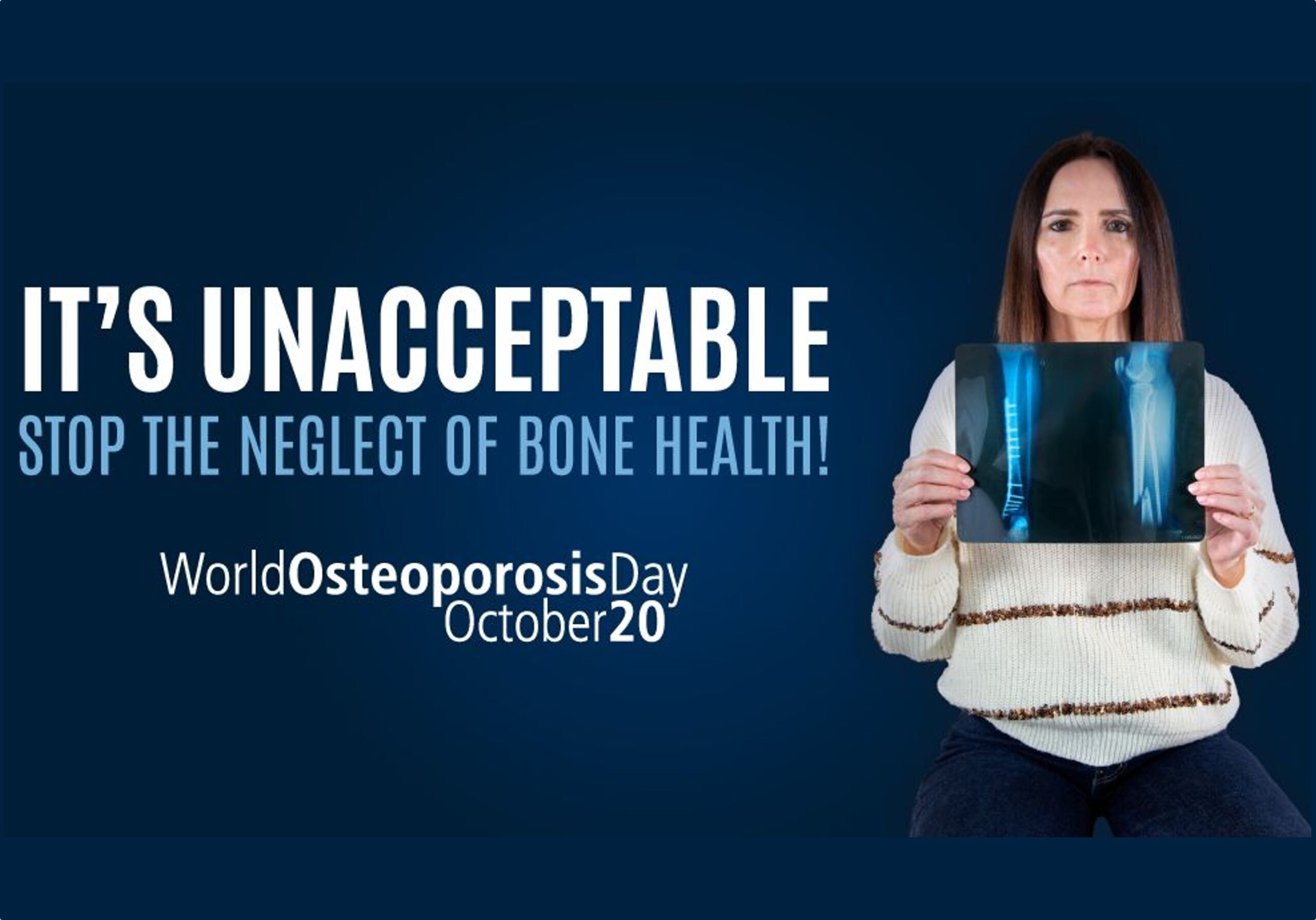
October 20, 2025, marked World Osteoporosis Day (WOD), an annual global campaign coordinated by the International Osteoporosis Foundation (IOF) to raise awareness of the prevention, diagnosis, and treatment of osteoporosis and fragility fractures. This year’s theme, “It’s Unacceptable! The Overlooked Crisis in Osteoporosis Prevention and Care” called for urgent global action to address a silent epidemic affecting over 500 million people worldwide. Every year, 37 million fragility fractures occur in people over 55 – about 70 fractures every minute. Yet, up to 80% of patients who suffer a fracture remain undiagnosed and untreated for underlying osteoporosis.
Across the Asia Pacific, members of the Asia Pacific Consortium on Osteoporosis (APCO) marked WOD 2025 through a diverse range of impactful initiatives – from public campaigns and policy launches to community walks and education programmes – each underscoring a shared mission to improve bone health and prevent fractures across the region. Keep reading to learn how some of our APCO members representing 24 countries and regions throughout the Asia Pacific, celebrated this important occasion – namely Australia, China, India, Indonesia, Mongolia, Nepal, New Zealand, Philippines and Singapore.
Australia
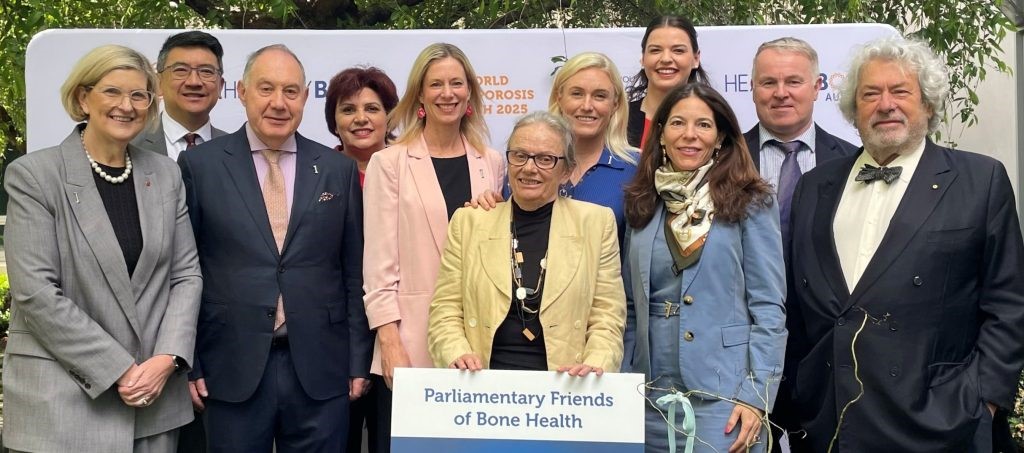
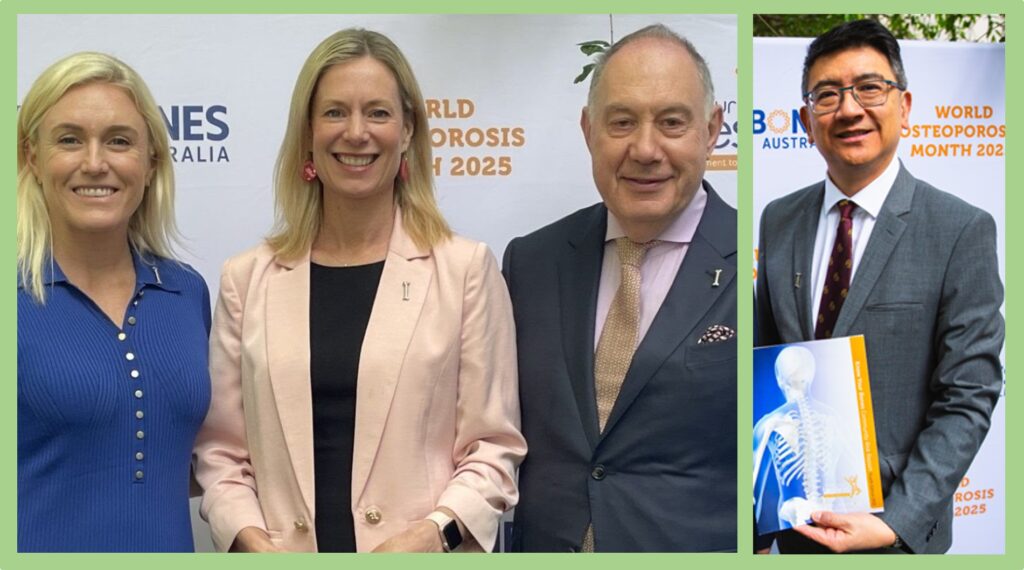
Healthy Bones Australia released a new Community Risk Report at Parliament House in Canberra on 27th October 2025, at an event hosted by the newly formed Parliamentary Friends of Bone Health. The report was based on over 126,500 completions of the Know your Bones online self-assessment and showed gaps in care and called for unified national action.
The report launch coincided with the Assistant Minister for Health, Ageing and Women, the Hon Rebecca White MP, announcing new funding support of $700,000 to boost early testing and prevention. Assistant Minister White said “This investment is about prevention and empowerment,” “Too many Australians – particularly women over 50 – are living with undiagnosed osteoporosis and facing fractures that could have been prevented.”
The event was attended by Know Your Bones Ambassador, Sally Pearson OAM, an Olympic and World Champion, patient advocates, clinical experts and federal politicians as part of Osteoporosis Awareness Activity during October. Sally Pearson said “As an ambassador, I often speak with people who share their stories of difficult recoveries from unexpected fractures.” and she stressed “fractures can happen to anyone and can change your life in an instant.”
Dr Greg Lyubomirsky, CEO Healthy Bones Australia and APCO Executive Committee member, stressed “Every fracture – even from a simple bump or fall – should be a clear signal to test, diagnose, and treat before another break occurs. With better awareness and action, thousands of fractures could be prevented each year.” Prof Peter Wong, Healthy Bones Australia Medical Director and Chair of the Medical Advisory Committee added “We must act early – identify bone fragility, intervene decisively and ensure those at risk receive the right care and treatment to reduce the impact of preventable fractures”.
The event attracted broad national media coverage including TV news, print and digital reports and national and regional radio.
China
In October 2025, the Chinese Society of Osteoporosis and Bone Mineral Research (CSOBMR) and its partners led a series of nationwide events under the theme “Healthy Weight, Strong Bones and Body”. The campaign blended innovation, public education, and clinical outreach to promote awareness of osteoporosis prevention and care.
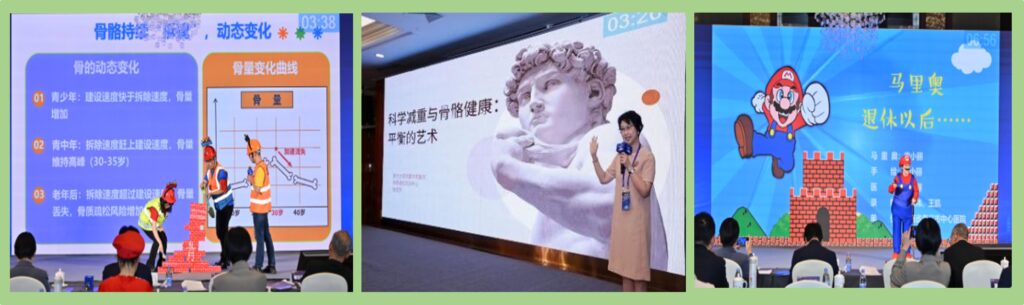
A major highlight was the “Healthy Bones” Science Popularization Competition, organised in Chengdu, Shanghai, and Beijing. The initiative engaged young doctors and science communicators who used creative digital tools – including AI-generated avatars, interactive lectures, and animation – to make bone health information accessible and engaging. At the Beijing opening session, leading experts Prof Xia Weibo (also an APCO member), Prof Zhang Zhenlin, Prof Li Mei, and Prof Xie Zhongjian jointly launched a new digital health communication initiative using “digital human” technology.
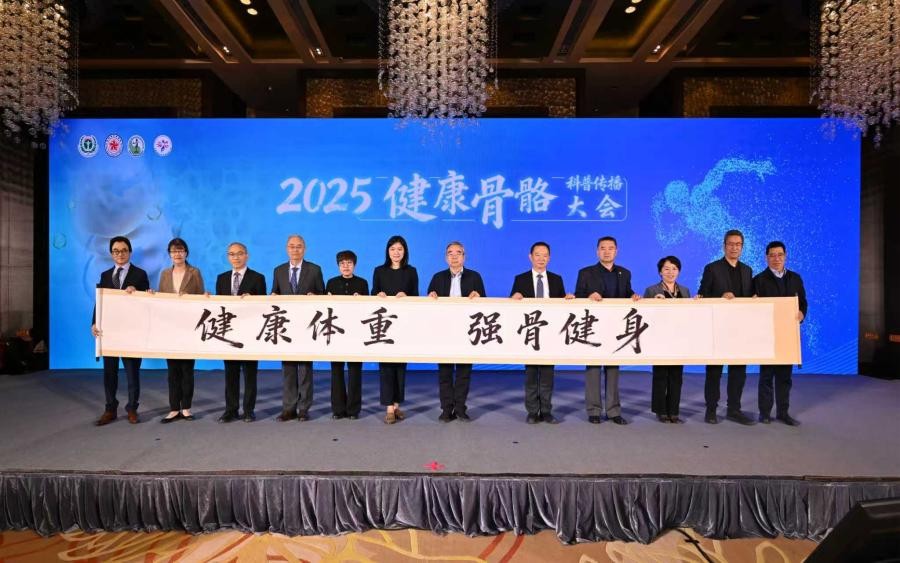 On World Osteoporosis Day itself, a large-scale national conference in Beijing officially unveiled the Chinese WOD theme. The event captured public imagination when experts Professors Xia Weibo and Zhang Zhenlin, alongside well-known health advocate and CCTV host Bai Yansong, performed on-stage planks and push-ups to symbolise the campaign’s message of strength. The demonstration, widely covered by national media, brought bone health discussions to millions of viewers.
The campaign also included multi-city public welfare consultations across hospitals and medical institutions nationwide. Under the same “Healthy Weight, Strong Bones and Body” theme, these community events offered free bone mineral density screenings, lifestyle advice, and expert consultations, enabling early detection and encouraging individuals to take preventive action. These grassroots activities effectively translated the campaign’s educational goals into real-world health services, especially benefiting older adults and at-risk populations.
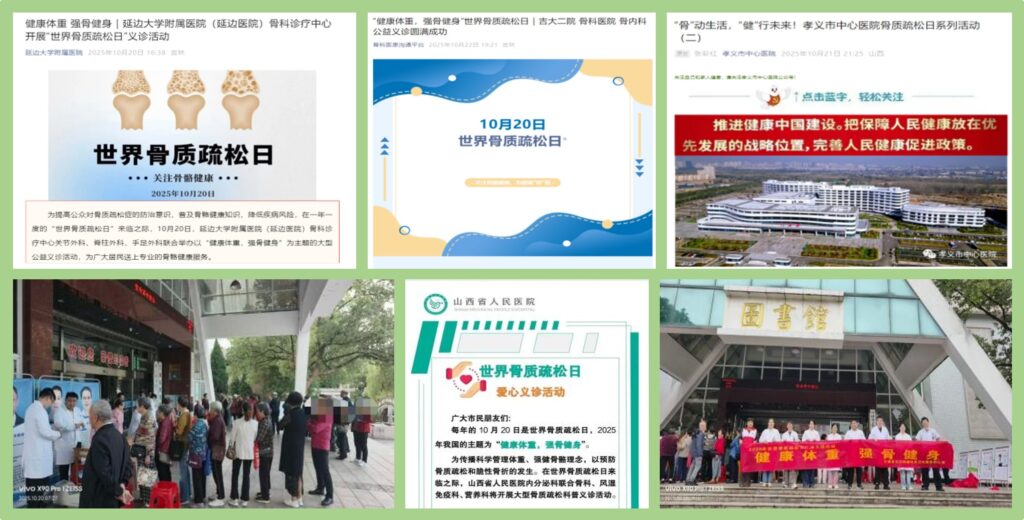
An extensive media and digital outreach strategy further amplified the campaign’s success. The main conference was livestreamed on 12 platforms, attracting 7.6 million viewers, while more than 40 major media outlets, including Xinhua News Agency, People’s Daily Health Client, and China National Radio, reported on the events. Social media engagement was equally remarkable – the hashtag #WorldOsteoporosisDay reached over 7.6 million views and 181,000 interactions on Weibo. Influential accounts, such as Life Times (8.9 million followers), featured the campaign, while the theme was also adopted by AI platforms and governmental health organisations, expanding its reach both online and offline.
Through its combination of innovative communication, expert leadership, grassroots participation, and nationwide media coverage, China’s 2025 WOD campaign effectively elevated public understanding of the crucial connection between healthy weight and bone strength – setting a strong example of how technology, education, and policy can work together to advance bone health awareness.
India
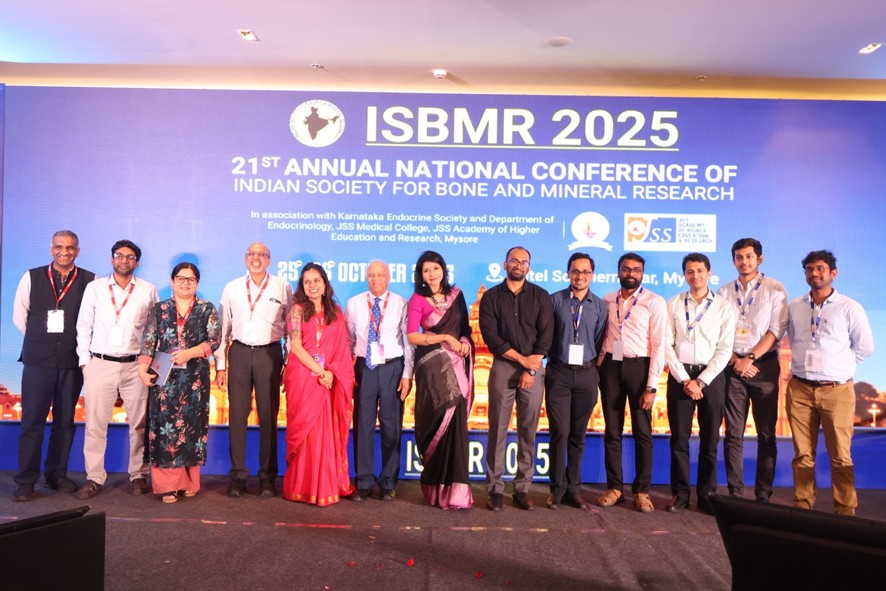
India commemorated World Osteoporosis Day 2025 with a blend of scientific excellence, collaboration, and public education, reflecting its strong commitment to bone health. The centerpiece of the celebration was the 21st Annual National Conference of the Indian Society for Bone and Mineral Research (ISBMR 2025), held in Mysuru from October 24–26, in partnership with the Karnataka Endocrine Society and the Department of Endocrinology, JSS Medical College. Led by Organising Secretary and APCO member Dr Lakshmi Nagendra, the conference drew over 250 delegates from diverse specialties and featured distinguished APCO faculty including Dr Manju Chandran, Dr Peter Ebeling, Dr Usha Sriram, Dr Ambrish Mithal, Dr Thomas Paul, and Dr Sanjay Bhadada. Their lectures and plenaries emphasized regional collaboration in fracture prevention and improved osteoporosis care across the Asia-Pacific.
The meeting also underscored ISBMR’s vibrant research culture through specialized tracks for faculty, trainees, and students, along with interactive case discussions and “Meet the Professor” sessions that encouraged mentorship and academic dialogue. These initiatives reinforced the society’s dedication to fostering the next generation of bone health experts and promoting multidisciplinary engagement in clinical and translational research.
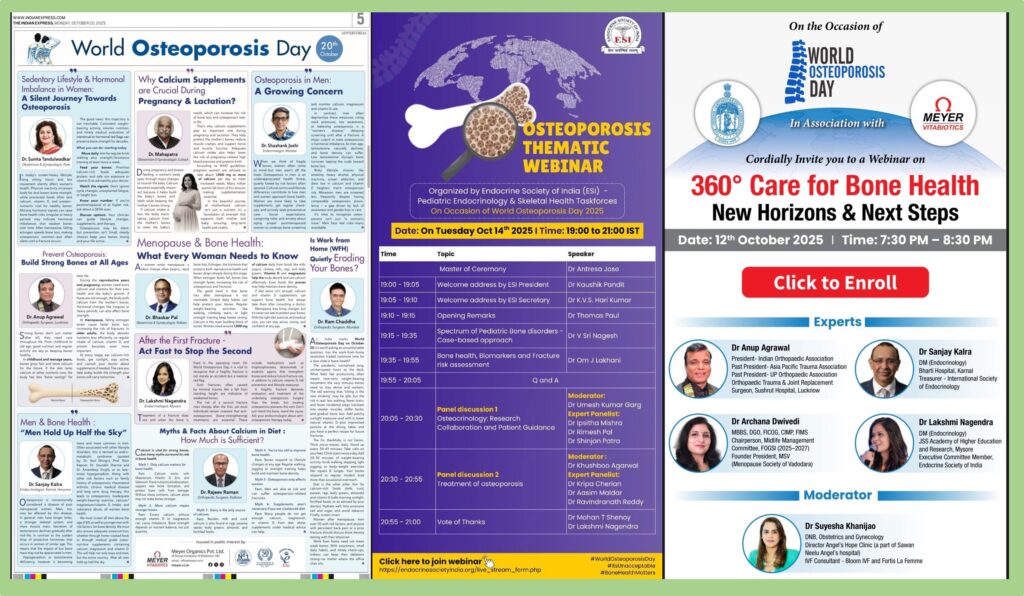
Public awareness and education were integral to India’s observance. A special full-page feature in a national newspaper on World Osteoporosis Day reached a broad readership, addressing bone health across all life stages – from adolescence to older adulthood – and advocating for secondary fracture prevention through early diagnosis and coordinated post-fracture care. Complementing this, a multidisciplinary webinar titled “360° Care for Bone Health” united endocrinologists, orthopaedicians, and midlife health specialists to discuss integrating lifestyle, nutrition, and pharmacologic strategies to strengthen bones and reduce fracture risk.
Furthering the scientific exchange, the Endocrine Society of India hosted a thematic webinar on osteoclinology, exploring the intersection of bone health, metabolism, and systemic disease. Sessions covered pediatric bone health, biomarkers, and collaborative research, emphasizing the importance of cross-specialty and multicentric approaches in advancing osteoporosis management. Together, these academic, clinical, and public initiatives showcased India’s unified effort to improve bone health awareness, strengthen care pathways, and champion a life free from fragility fractures.
Indonesia
To commemorate World Osteoporosis Day (WOD) 2025, the Indonesian Osteoporosis Society (PEROSI) launched a nationwide campaign themed “It’s Time to Act: The Ongoing Crisis in Osteoporosis Prevention and Care” (“Saatnya Bertindak: Krisis yang Ada Terkait Pencegahan dan Perawatan Osteoporosis”). Spearheaded by APCO and PEROSI member Dr Paulus Rahardjo, activities spanned Jakarta, Medan, and Surabaya, combining professional education, mass participation events, and partnerships with government and industry. The campaign underscored a united national effort to raise awareness and strengthen prevention and care for osteoporosis.
The celebration began with the 1st FFN Indonesia Scientific Meeting on 14 September 2025 in Jakarta, where the establishment of FFN Indonesia and the Fracture Liaison Service (FLS) Working Group was announced. Conducted in collaboration with the Ministry of Health, this initiative aims to reduce recurrent fractures by at least 30%, aligning national strategies with global best practices. This marked a major milestone for Indonesia in adopting integrated post-fracture care models and advancing evidence-based bone health management.
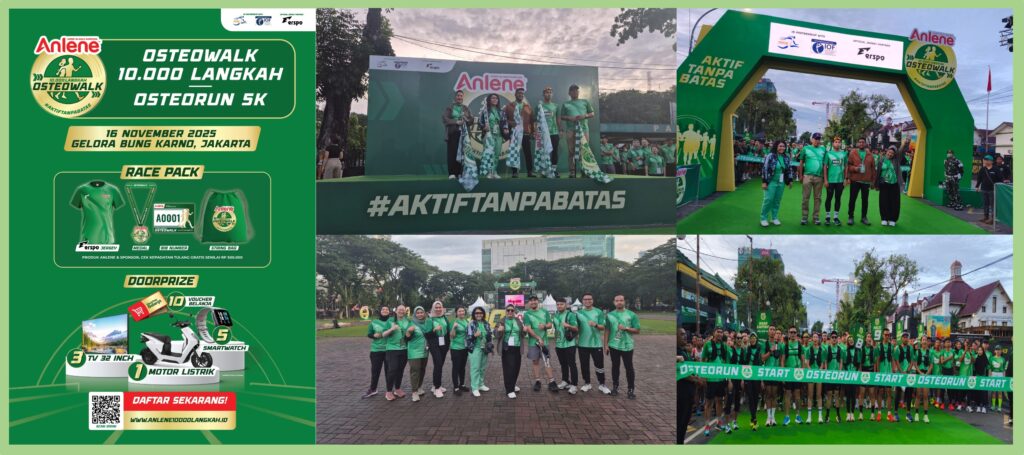
Public engagement peaked with the Osteowalk 10,000 Steps & Osteorun 5K, held across Jakarta, Medan, and Surabaya from October to November. Co-hosted with Anlene and supported by the International Osteoporosis Foundation (IOF), the events drew over 5,000 participants who enjoyed free bone health screenings, educational booths, fitness sessions, music, family games, and door prizes. Health professionals including Dr Aswin, Dr Elfina, Dr Monica, and Dr Clements delivered talks on calcium, vitamin D, and fall prevention, creating a joyful, inclusive environment that motivated participants of all ages to stay active and prioritize bone health.
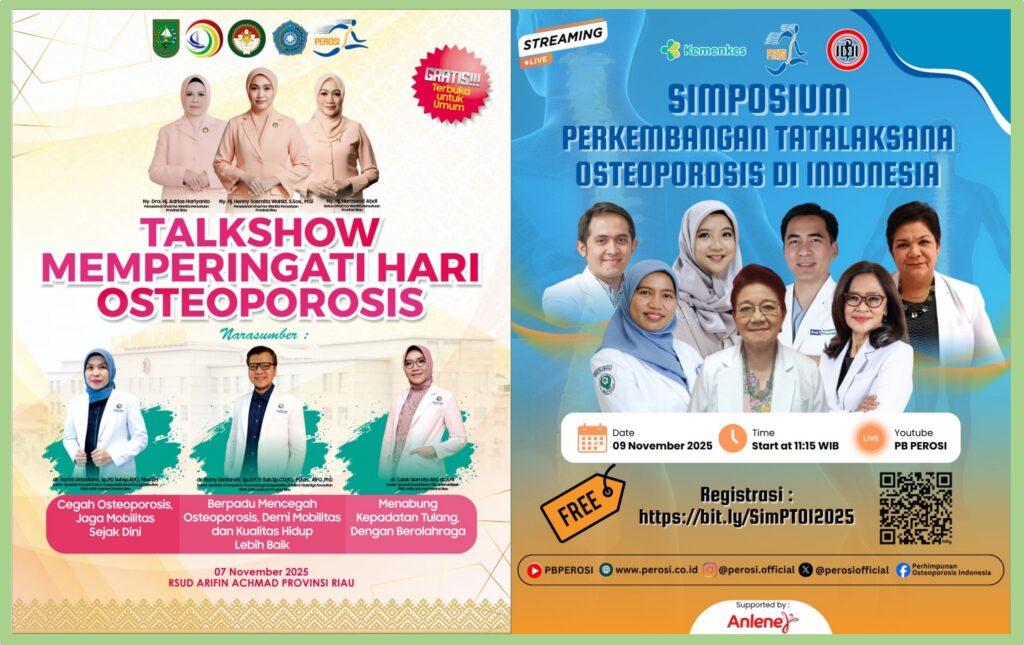
Expanding community outreach, PEROSI supported a regional talk show on osteoporosis awareness at RSUD Arifin Achmad, Riau Province, on 7 November 2025, themed “Prevent Osteoporosis, Preserve Mobility, and Improve Quality of Life.” Organized with the Riau Provincial Health Office and Dharma Wanita of Jambi Province, the event showcased women’s leadership in health advocacy. Featuring expert speakers Dr Harith Oktadinata, Dr Remy Devriandi, and Dr Luluk Qurrataini, the session provided practical advice on early prevention, exercise, and nutrition. The active participation of Dharma Wanita representatives demonstrated how interprovincial collaboration can amplify public education and empower communities.
Rounding off the nationwide effort, PEROSI hosted a National Online Symposium titled “Advances in Osteoporosis Management in Indonesia” on 9 November 2025, in collaboration with the Ministry of Health and supported by Anlene. Broadcast live on PB PEROSI’s YouTube channel, the symposium gathered over 1,500 participants from hospitals, universities, and health centers. Featuring six expert speakers from multiple disciplines — including internal medicine, orthopedics, neurology, nutrition, rehabilitation, and sports medicine — the program explored the role of Denosumab, FLS models, nutrition and physical activity, and rehabilitation in comprehensive osteoporosis care. By equipping healthcare professionals with updated knowledge and strengthening community awareness, Indonesia’s WOD 2025 campaign embodied the IOF vision of “Working together for a world without fragility fractures.”
Mongolia
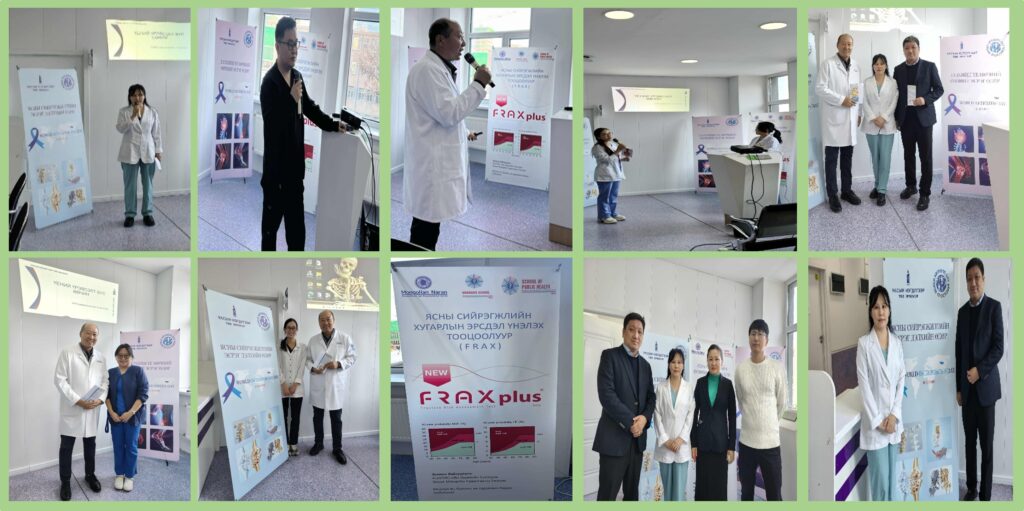
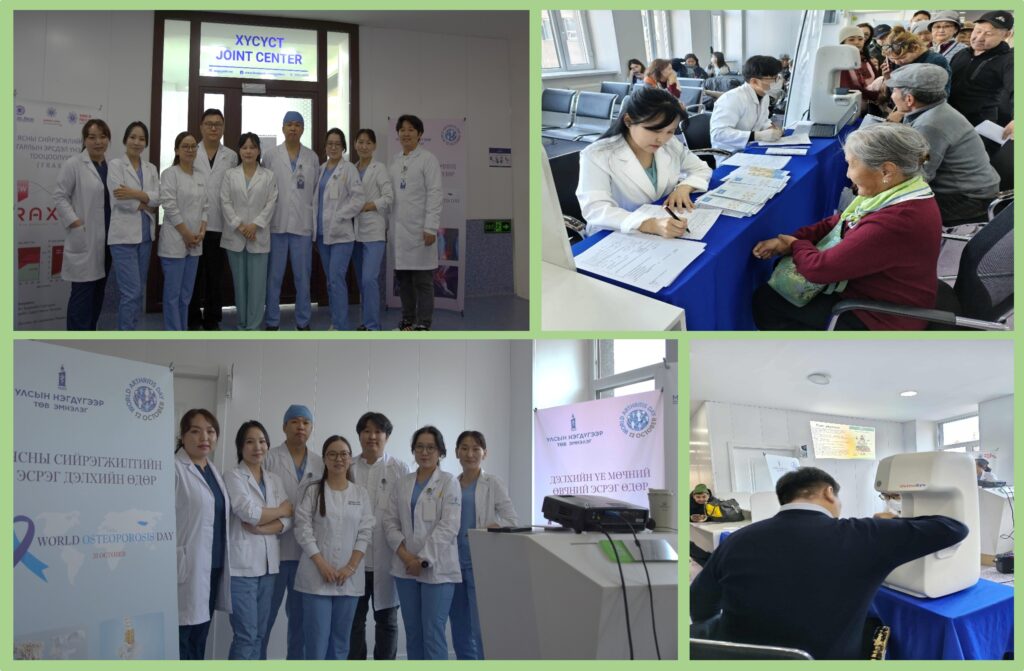
Mongolia celebrated its 4th consecutive World Osteoporosis Day on 17 October 2025, coinciding with World Arthritis Day, reflecting the country’s holistic approach to musculoskeletal health. The day opened with a ceremony led by Dr Myadagmaa Jaalkhorol, APCO Committee Member and President of the Mongolian Naran Society of Osteoarthritis and Musculoskeletal Health, alongside Prof Amarsaikhan Dashtseren and Ms Enkhtaivan Narangerel from the First Central Hospital of Mongolia.
In collaboration with the Graduate School, MNUMS, and the Department of Health Research, the team conducted a knowledge and risk assessment study involving 100 outpatients, using translated IOF osteoporosis questionnaires to evaluate public awareness and promote healthy lifestyle changes. These efforts, supported by Denk Pharma LLC, aimed to integrate osteoporosis prevention into broader musculoskeletal health promotion. Mongolia’s steady commitment to observing WOD each year continues to foster greater understanding and proactive management of bone health among both professionals and the public.
Nepal
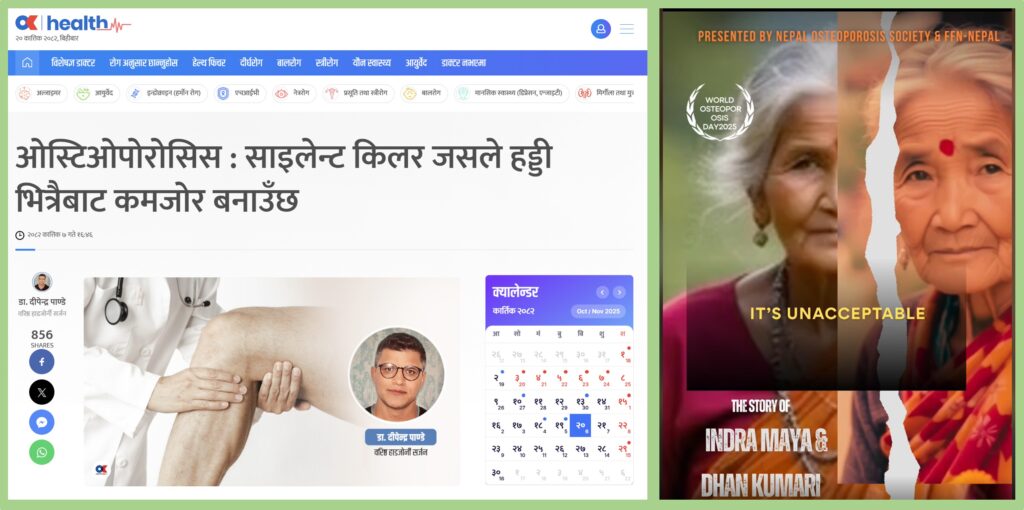
In Nepal, the Nepal Osteoporosis Society (NEOS) observed WOD 2025 under the theme “It’s Unacceptable”, focusing on community education and media engagement. Led by APCO member Dr Dipendra Pandey, NEOS mobilised doctors and advocates across the country to write educational articles in Nepali, deliver radio talks, and share bone health messages on social media.
A key highlight was the release of a 5-minute awareness video on osteoporosis prevention, which was widely viewed and shared across platforms, resonating deeply with the public. The campaign’s simple yet powerful message emphasised that osteoporosis can be prevented with awareness, nutrition, and timely screening. These efforts helped bring osteoporosis into mainstream conversation in Nepal, particularly among communities where bone health has traditionally received little attention.
To read the article, click here: https://www.onlinekhabar.com/2025/10/1788732/osteoporosis-the-silent-killer-that-weakens-bones-from-within
To watch the awareness video, click here: https://tinyurl.com/2jhzx4ru
New Zealand
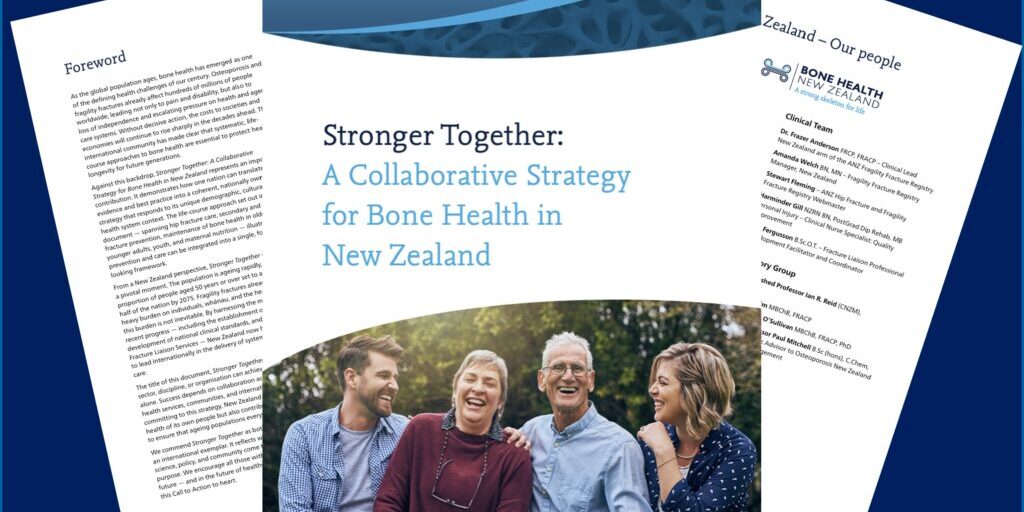
On 5 November 2025, Osteoporosis New Zealand (ONZ) launched its landmark national strategy, Stronger Together: A Collaborative Strategy for Bone Health in New Zealand, at Parliament in Wellington. Endorsed by IOF President Prof Nick Harvey and FFN President Prof Takeshi Sawaguchi, the initiative presents a comprehensive life-course approach to bone health. The strategy sets seven national objectives – from improving hip fracture care and expanding secondary prevention through Fracture Liaison Services to promoting bone health in midlife and early life stages. It emphasises that healthy bones start early and require attention throughout life.
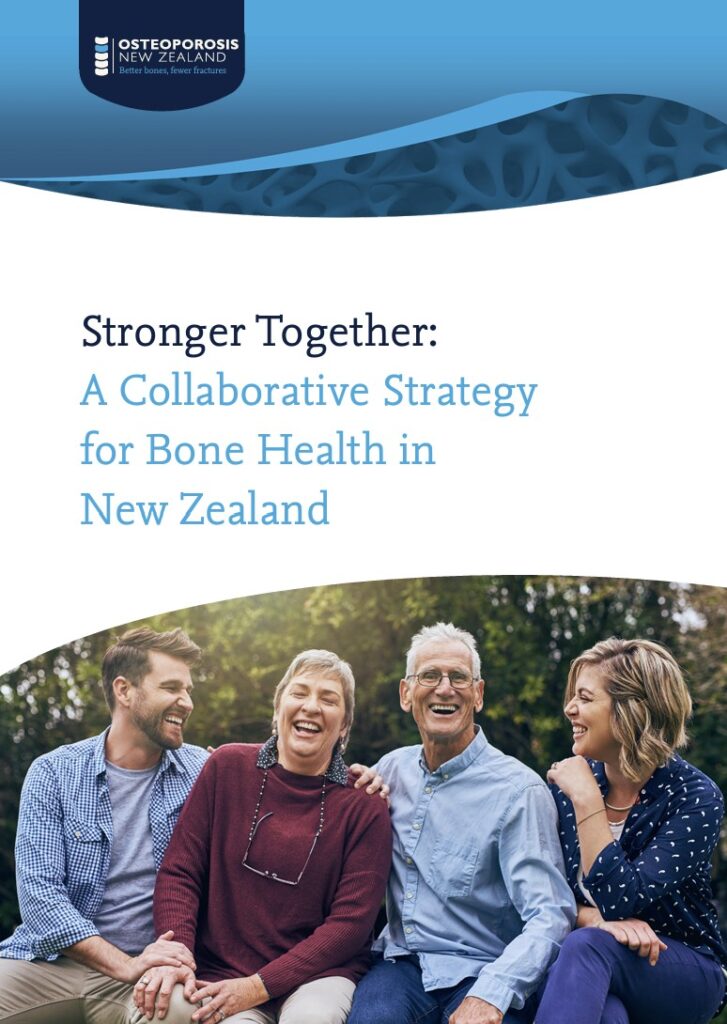 Developed through a decade of collaboration between clinicians, policymakers, and patient advocates, Stronger Together exemplifies the APCO ethos of partnership and evidence-based action. The strategy’s open-access model (Creative Commons Attribution licence) encourages adaptation by other Asia Pacific nations seeking to strengthen their bone health frameworks. This initiative underscores how collaboration, data, and shared learning can accelerate regional progress toward the common goal of reducing fragility fractures and improving quality of life for ageing populations.
“The launch of Stronger Together marks a milestone not only for New Zealand but potentially for our entire region,” said Prof Manju Chandran, Chairperson of APCO. “It shows how the vision we have pursued together – integrated, evidence-based, and patient-centred bone health care – can be realised at national level. Importantly, it invites others across Asia Pacific to adapt, refine, and build upon this model within their own health systems.”
“Both APCO and Osteoporosis New Zealand are built on the belief that we achieve more when we act collectively,” noted Adjunct Prof Paul Mitchell, ONZ Strategic Advisor and APCO Executive Committee Member. “Our friends across Asia Pacific are welcome to adapt and evolve the life-course approach outlined in Stronger Together to suit their national contexts. The challenges may differ, but our goal is the same – to prevent avoidable harm, extend healthy life expectancy, and strengthen communities through better bone health.”
Stronger Together stands as one contribution to this collective effort – a blueprint not just for New Zealand, but for any nation determined to ensure that its people, at every stage of life, can live longer, healthier, and stronger lives. The full strategy is available at https://osteoporosis.org.nz/about-us/plans-and-reports/.
Philippines
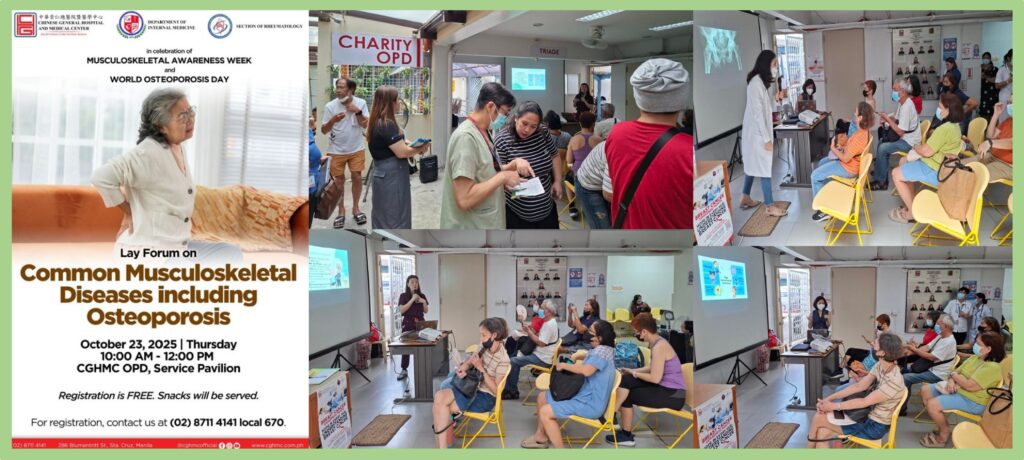
The Philippines marked World Arthritis Day and World Osteoporosis Day in October 2025 through activities led by the Section of Rheumatology of Chinese General Hospital and Medical Center (CGHMC) and the University of Santo Tomas Hospital (USTH). On October 23, CGHMC joined the global observance by raising awareness on bone and joint health, promoting proactive measures, and supporting Filipinos living with rheumatic and musculoskeletal diseases (RMDs). Through lay education and community engagement, the event emphasized that maintaining strong bones and healthy joints is key to living active, independent lives.
At CGHMC, rheumatology specialists shared tips for managing RMDs, particularly inflammatory arthritis, and encouraged patients to pursue their goals despite daily challenges. Speakers dispelled myths that arthritis affects only the elderly, stressing that it can occur at any age. The campaign reinforced that early diagnosis, effective treatment, and supportive healthcare systems enable patients to lead fulfilling lives, while urging policymakers to ensure accessible and comprehensive RMD care for all.
The celebration also reflected the World Osteoporosis Day 2025 theme, “It’s Unacceptable!”, drawing attention to the underdiagnosis and undertreatment of osteoporosis. The team highlighted that up to 80% of fragility fracture patients do not receive follow-up care, leading to preventable secondary fractures. Patient education focused on recognizing osteoporosis as a “silent disease” and the importance of adequate calcium and vitamin D intake, regular weight-bearing exercise, and healthy habits to prevent bone loss and fractures.
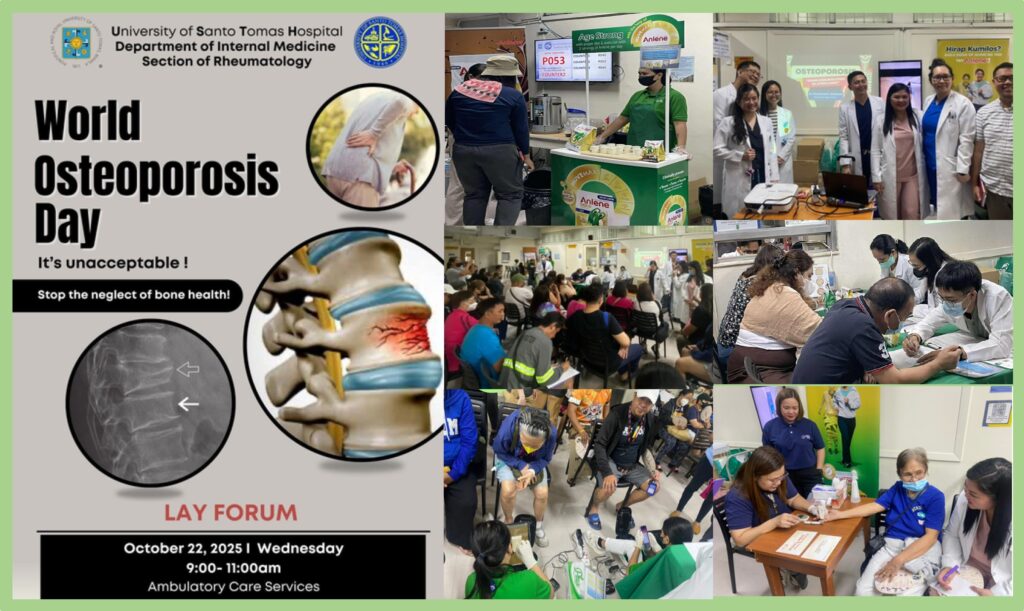
Meanwhile, USTH commemorated World Osteoporosis Day on October 22, 2025, through an engaging event at its Ambulatory Care Services. The celebration featured a lay forum led by Dr Muhammad Mohamad, who explained osteoporosis development, diagnosis, and prevention in accessible terms. To promote early detection, free peripheral bone DXA screenings were provided, while an open forum encouraged patients to ask questions and interact directly with healthcare professionals.
The USTH event also offered free milk sampling and nutritional counseling, underscoring the role of proper diet in bone health. Managed by Rheumatology Fellows with support from Consultants, the program highlighted the need for balanced nutrition, sufficient calcium and vitamin D, and moderation of substances that impair bone density such as caffeine, sodium, and alcohol. These initiatives empowered participants to make informed choices for long-term bone strength. Together, the CGHMC and USTH programs demonstrated the Philippines’ continued commitment to advancing public awareness and fostering a healthier, more active population.
Singapore
Breaking New Ground in Bone and Muscle Health: Joint Public Forum by Singapore General Hospital’s Endocrinology and Geriatric Medicine Departments
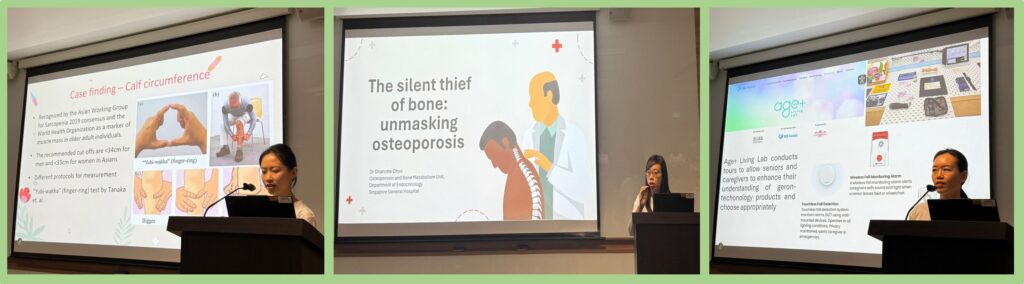
On 1 November 2025, the Osteoporosis and Bone Metabolism Unit, Department of Endocrinology, and the Department of Geriatric Medicine, Singapore General Hospital (SGH) jointly organised a public forum titled “Breaking New Ground in Singapore: Joint Public Forum on Bone and Muscle Health.” APCO Chairperson Prof Manju Chandran who is also a Senior Consultant and Director of the Osteoporosis and Bone Metabolism Unit shared about the forum.
The forum that was held as a hybrid event including both onsite and online participants expanded the theme of the IOF’s 2025 WOD to declare that the loss of Bone and Muscle health is unacceptable and brought together specialists in endocrinology, geriatrics, physiotherapy, and dietetics to promote awareness and prevention of osteoporosis, sarcopenia, and falls in older adults.
The multidisciplinary programme featured talks on osteoporosis (“The Silent Thief of Bone”), sarcopenia (“The Secret Loss You Can’t Afford”), falls prevention, and nutrition for musculoskeletal health. Participants also took part in a live resistance band exercise demonstration led by our physiotherapist. The session concluded with an engaging Q&A, underscoring the collaborative spirit of the SGH bone and muscle health team. Endorsed by the International Osteoporosis Foundation (IOF) and the Asia Pacific Consortium on Osteoporosis (APCO), the event exemplified SGH’s commitment to empowering the public through evidence-based education and interdisciplinary teamwork in healthy ageing.
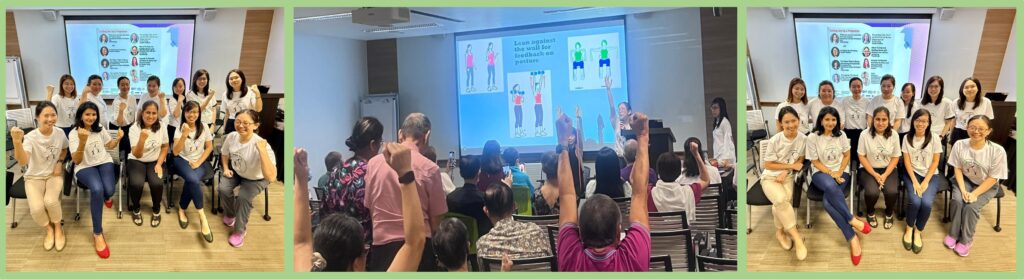
A United Call for Stronger Bones Across the Asia Pacific
World Osteoporosis Day continues to be a powerful reminder of APCO’s shared mission – to raise awareness, promote prevention, and advance clinical standards across 24 countries and regions. From parliamentary launches and national reports to mass fitness events and social campaigns, WOD 2025 showcased the creativity, collaboration, and cultural diversity that define our region’s bone health movement. Together, APCO members reaffirm their commitment to the IOF vision – “Working together for a world without fragility fractures.”
To learn more about APCO’s commitment to developing tangible solutions to the substantive challenges involving osteoporosis management and fracture prevention in the world’s most populated and fastest-growing region, head to apcobonehealth.org and follow us on LinkedIn.